
An Exceptionally Dense Chess Culture
Swedish organized chess developed through long-lived clubs, the Nordic Chess Federation, and the Swedish Chess Federation founded in 1917. By the mid-1950s, federation membership per capita was extraordinarily high compared with the United States. Sweden therefore had exactly the kind of dense club culture that could sustain demand for tournament clocks.
Illustrated record
The membership series shows that Swedish organized chess was not a short-lived mid-century phenomenon. Federation membership rose slowly through the first half of the twentieth century, reached 17,659 by 1997, hovered near that level into the 2000s, and then accelerated sharply after 2010. The 2021 pandemic-era drop to 28,207 was followed by a rebound to 48,334 in 2025, the highest figure in the series. That long institutional depth helps explain why Sweden could sustain a real domestic market for specialized tournament equipment even without a large movement-manufacturing industry.
The production-value series helps explain why Swedish chess-clock history looks unlike Germany’s. Reported Swedish clock and watch production value reached a wartime peak of 390,400 SEK in 1916, then contracted for much of the following period, falling to 13,275 SEK in 1933. Sweden retained clockmakers, retailers, casework, and technical expertise, but the data do not show a continuously expanding domestic movement industry capable of supplying a huge specialist chess-clock market.
A Modest Horological Base
Swedish clockmaking had real depth—from Polhem's mechanization experiments and Mora's household production to urban precision workshops, Halda, and Westerstrand—but it never created the enormous mass-market movement industry found in Germany. Swedish chess-clock makers therefore often sourced mechanical cores abroad.
Illustrated record
Publishing Becomes Distribution
The earliest securely dated Swedish chess-clock advertisement presently identified appeared in 1925 through F. Englunds Förlag, a publisher embedded in organized chess. The manufacturer was not named. In 1928, Schackvärlden went further by giving a clock its publication name: 'Typ Schackvärlden.' Commercial identity could be created by the chess institution even when the mechanical workshop remained invisible.
Illustrated record
A Recognizable Slide-Bar Tradition
The collector-described 'Gustaf Nyholm' type adds a surviving physical design: a light wooden case with a full-width sliding bar and German movements. Similar clocks appear in Swedish tournament photographs of the 1940s. This suggests a local construction tradition built around imported mechanical cores.
Illustrated record
Brand and Manufacture Separate
Munter demonstrates the separation even more clearly: a Swedish-registered horological name appears on Swiss-made timepieces, including a timer used by a Swedish chess club. The object is Swedish in commercial and use history, Swiss in manufacture, and not necessarily designed originally as a chess clock.
Illustrated record
Tower / Tornuret
Tower represents the mature hybrid model. Developed through a Swedish-Danish chess commercial network, early versions used Junghans movements and later versions used Peter/JAZ mechanics. Swedish branding, case/control design, and distribution combined with continental movement manufacture.
Illustrated record
Institutional and Anonymous Families
A 'Swedish Federation' clock appears mechanically close to Koopman products, while the pink push-bar family spans several decades without a known manufacturer. Other clocks use German or Jerger components inside distinctly Swedish cases and controls.
Illustrated record
Historical Sequence
The Swedish story is therefore not a failed attempt at vertical manufacture. It is a successful hybrid system. Organized chess supplied demand and distribution; local makers or assemblers supplied cases and switching ideas; foreign factories supplied movements. The visible national identity of the finished clock emerged from the combination.
Further visual record
Additional surviving objects, documentary images, advertisements, and data from this national history.
Sweden’s Horological Decline
That industrial backdrop produced a hybrid model. Swedish makers and chess suppliers could contribute the case, switching system, branding, assembly, and route to clubs while sourcing movements from established manufacturers abroad. The finished clock could therefore be meaningfully Swedish even when the movement itself was German, Swiss, or French. National identity existed at a different layer of the supply chain than the mechanism.
Explore this national record
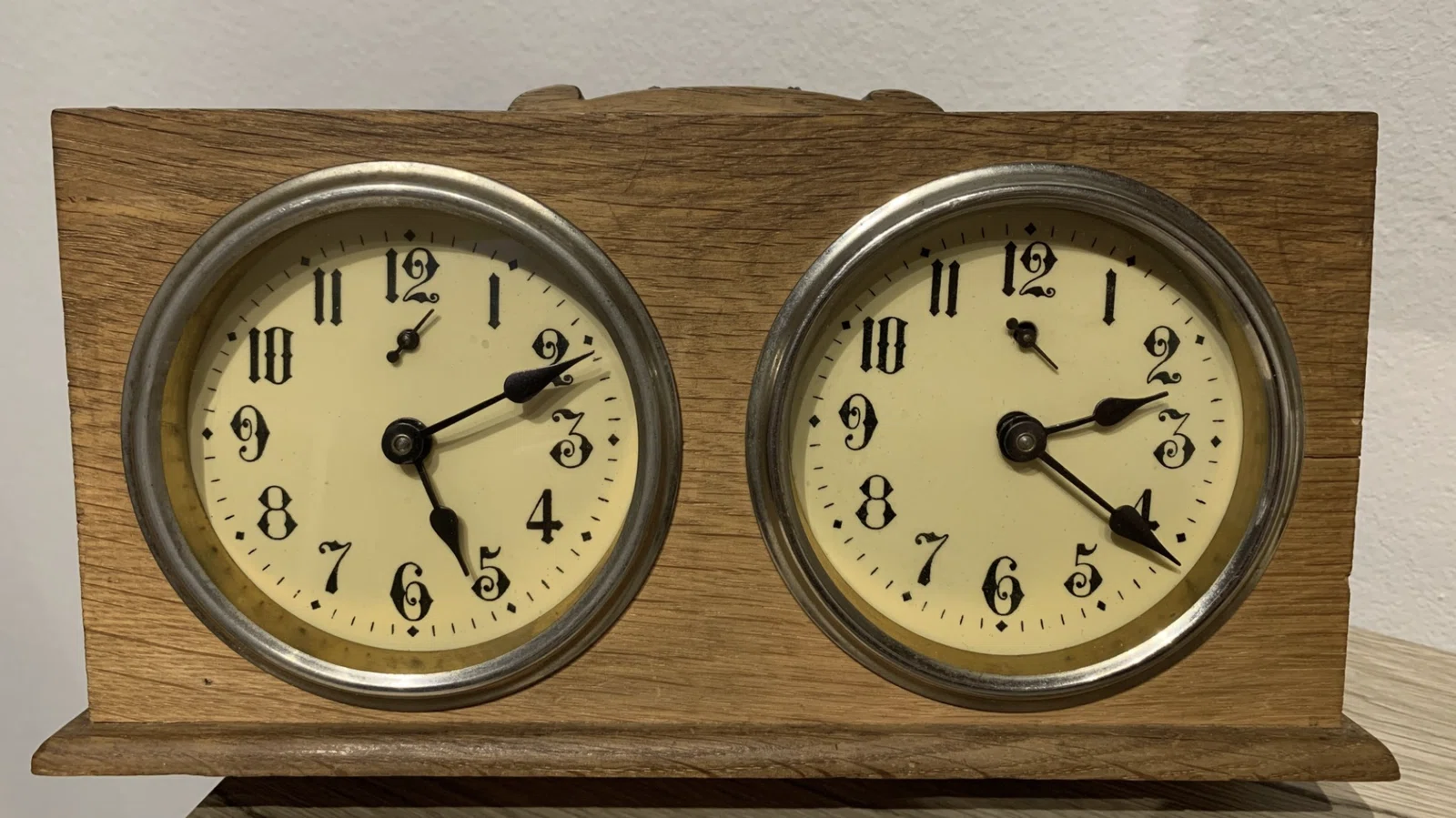
F. Englunds Förlag
Sweden's earliest securely documented chess-clock offering came through a federation-linked publisher rather than a known clock factory.
Read the History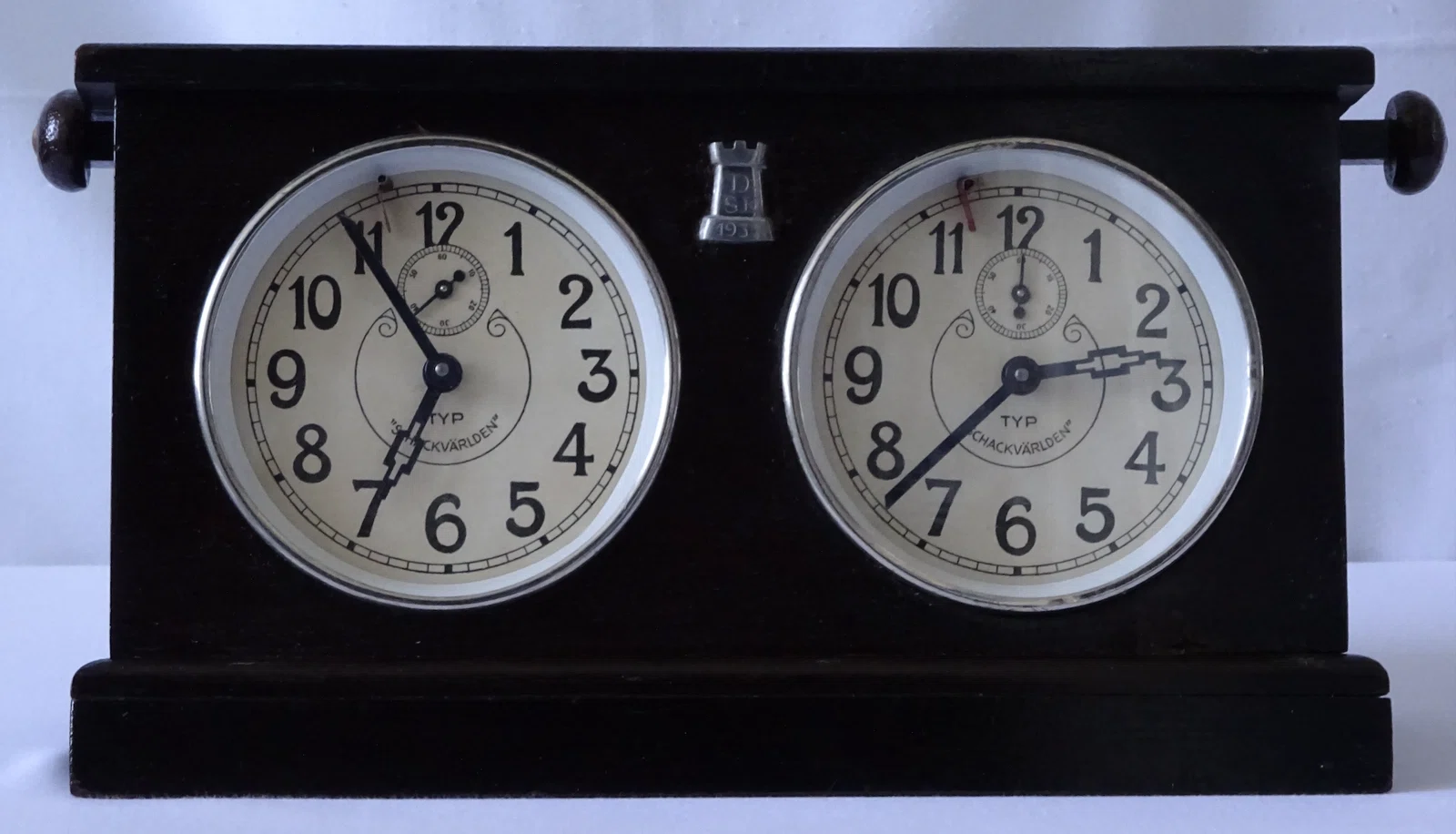
Typ Schackvärlden
A 1928 publisher-branded clock that shows product identity emerging even when the underlying mechanical maker remained unknown.
Read the History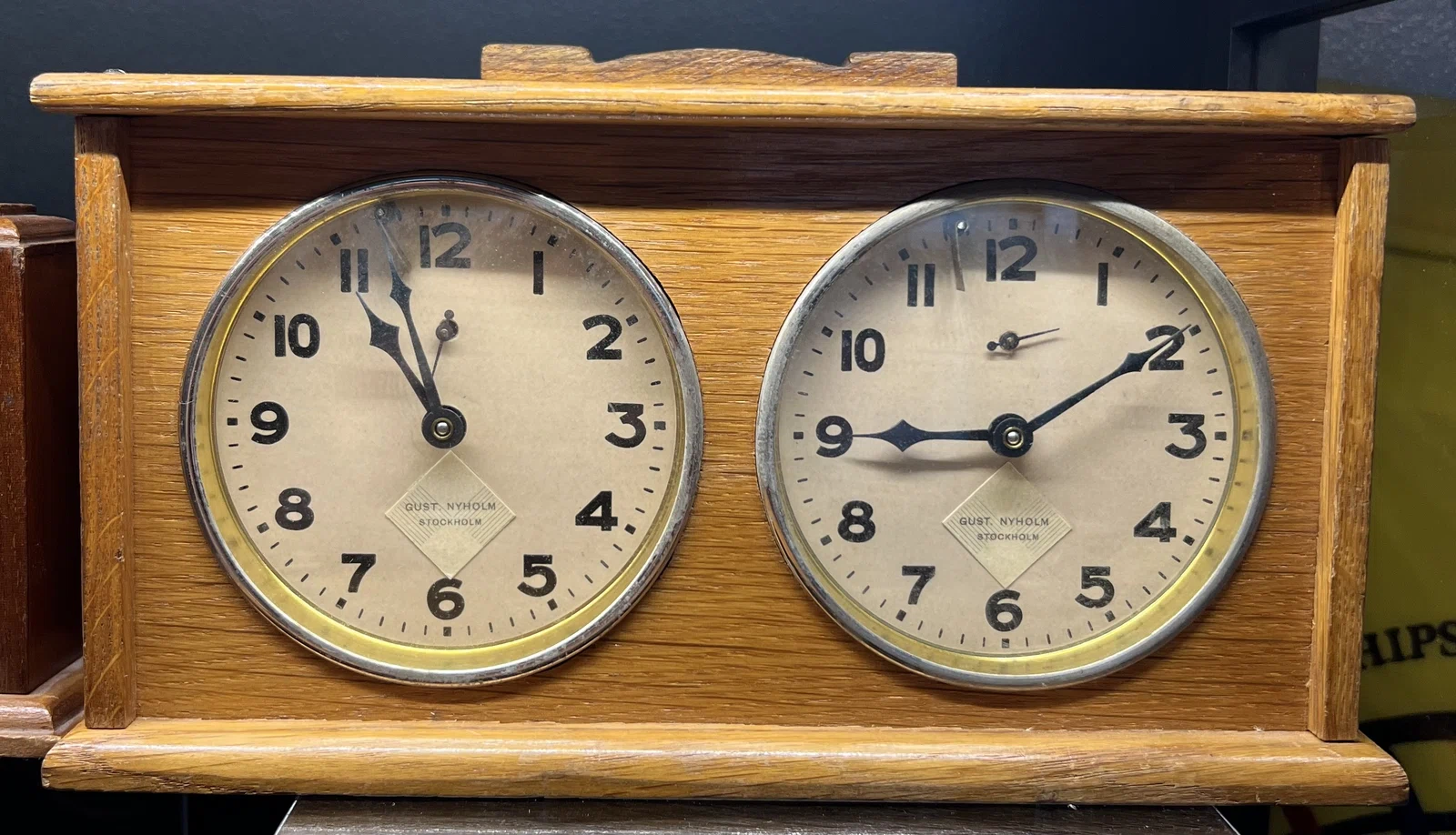
The 'Gustaf Nyholm' Type
A distinctive Swedish slide-bar tournament clock with German movements and provenance strong enough to document use, but not manufacture.
Read the History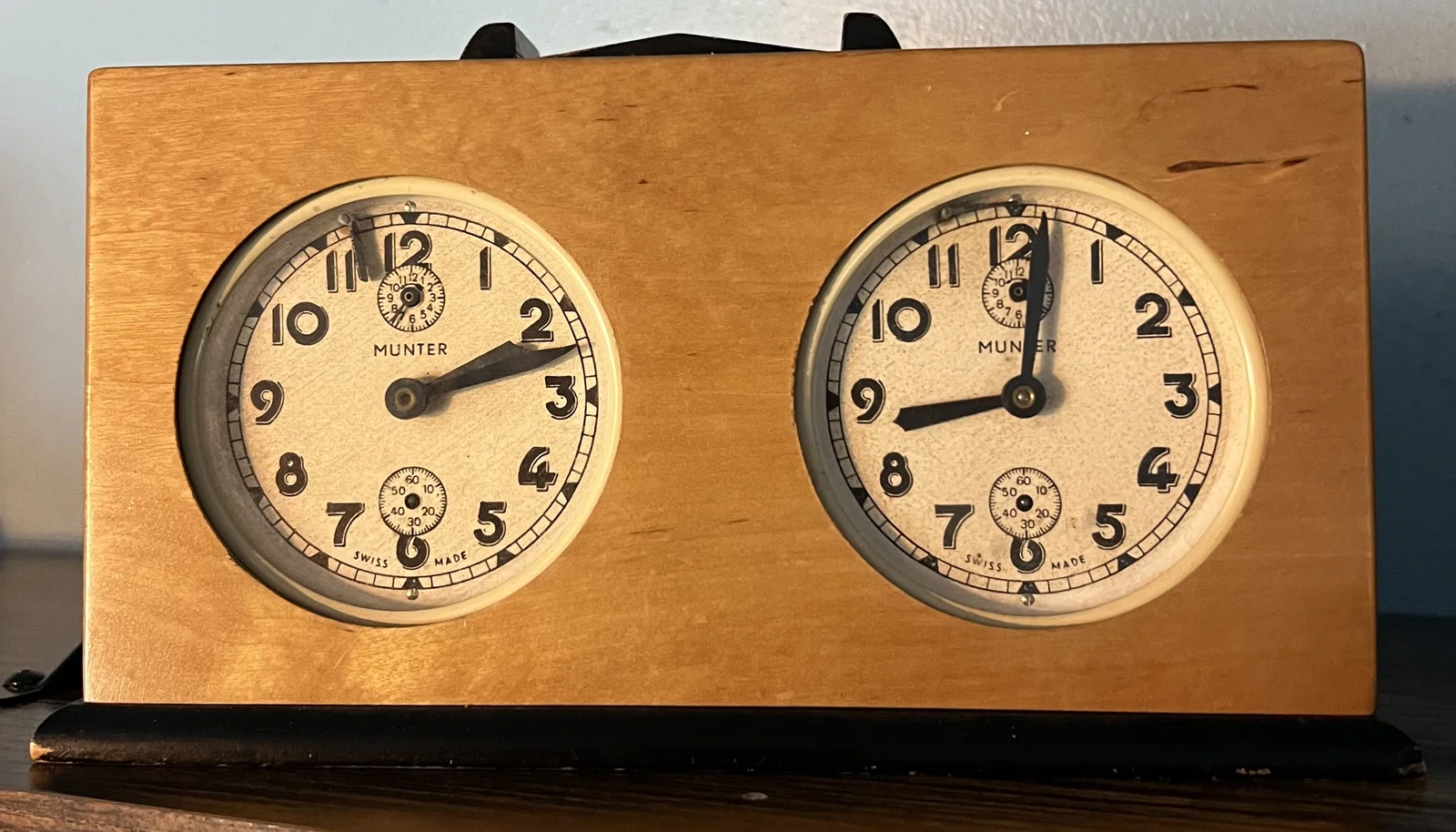
Munter
A Swedish trademark on Swiss-made timepieces that forces a careful distinction between brand nationality, mechanical origin, and eventual chess use.
Read the History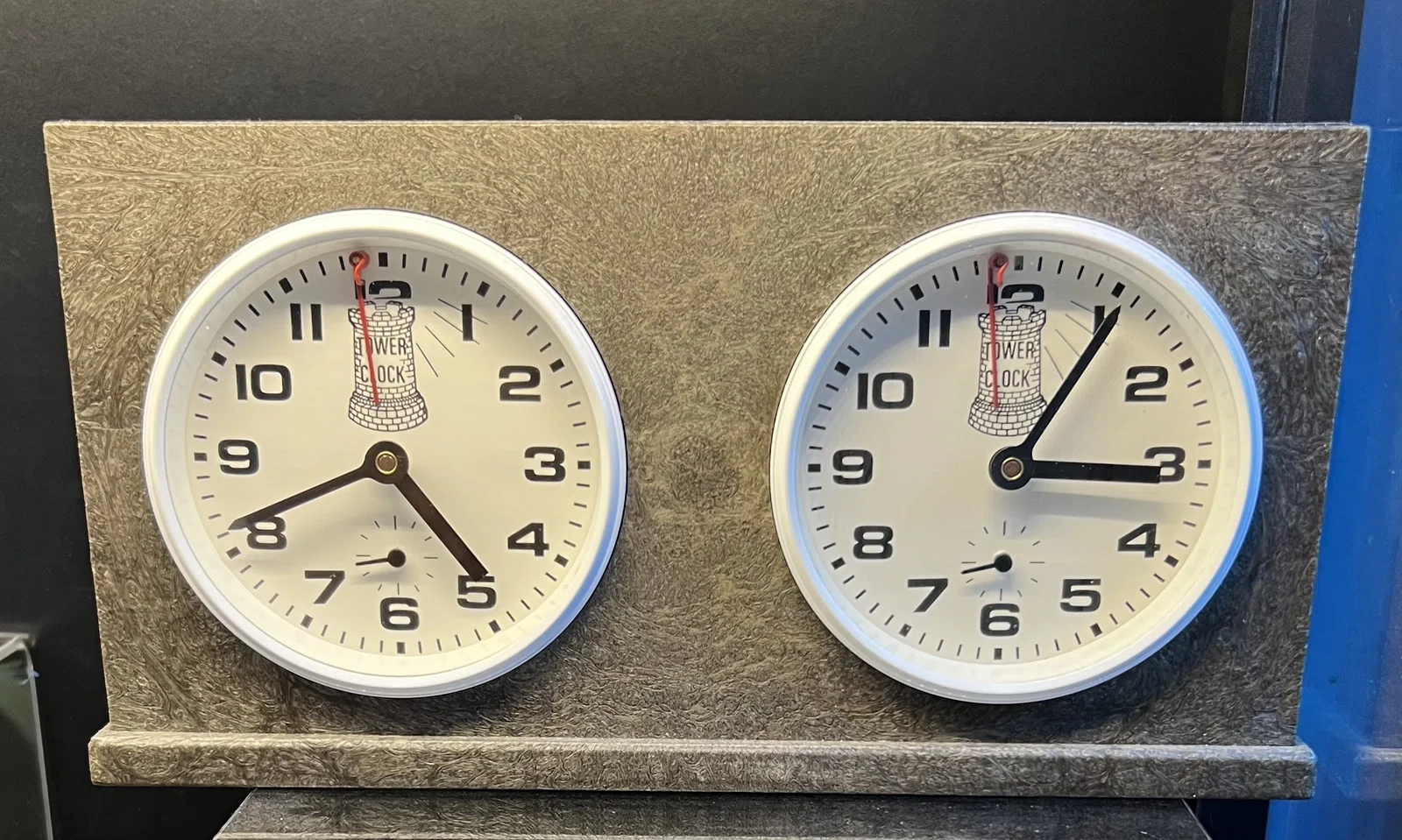
Tower / Tornuret
The mature Swedish hybrid chess clock: domestic chess expertise and branding built around imported German and French mechanical technology.
Read the History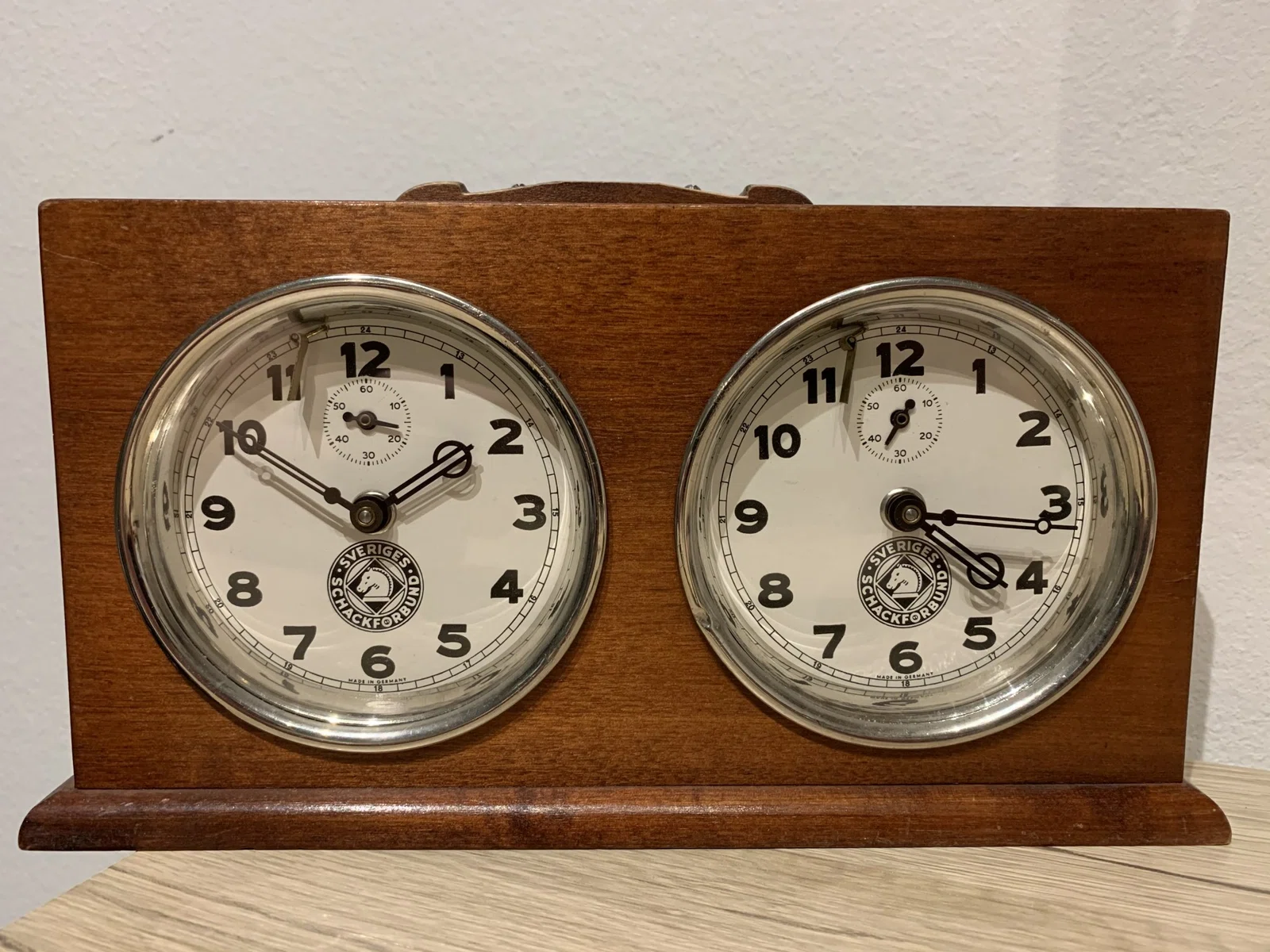
Swedish Federation Clock
A clock with clear Swedish institutional identity and mechanical similarities to Koopman, but no securely identified complete-clock maker.
Read the History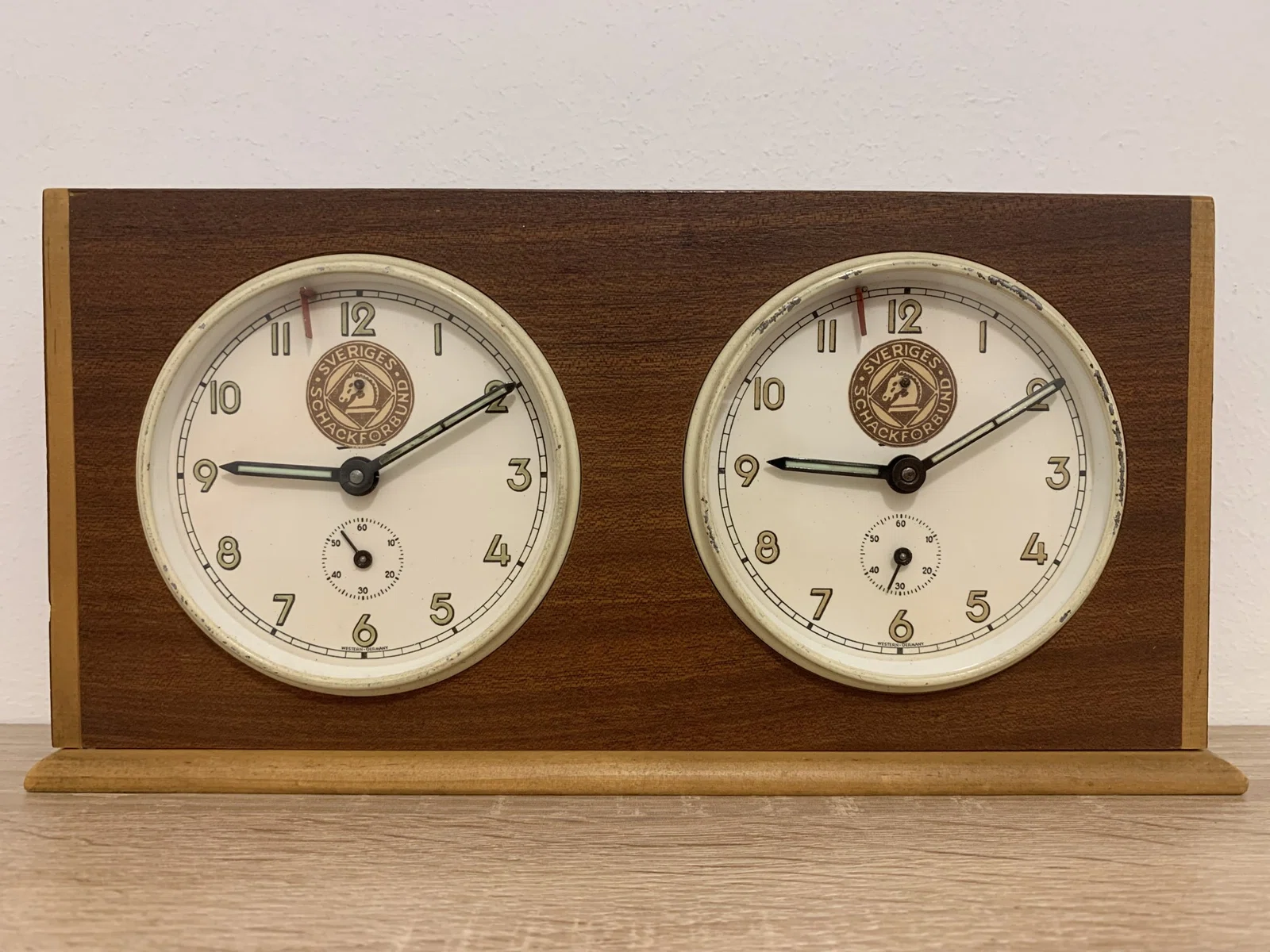
Pink Push-Bar Family
A collector-defined Swedish design lineage spanning roughly the 1950s–1970s despite the absence of an identified manufacturer.
Read the History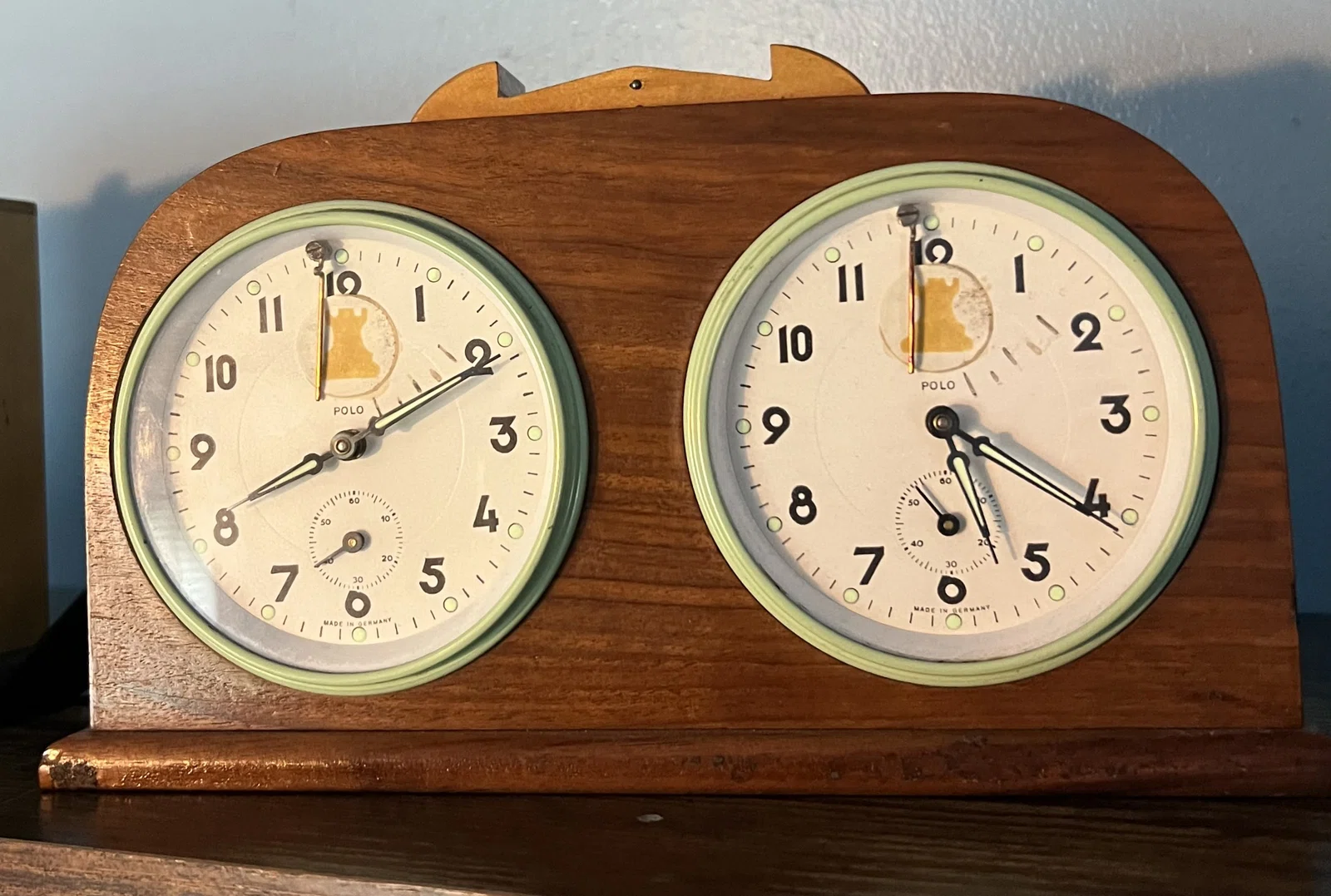
Other Swedish Chess Clocks
Unidentified and heavily modified clocks that expose the full complexity of Sweden's hybrid production tradition.
Read the History