
A Strong Chess Nation Before Domestic Clocks
Hungarian organized chess grew from the Pest chess circle of the nineteenth century into elite international competition, national championships, team leagues, and early Olympiad success. Budapest hosted a major international tournament in 1896, Hungary helped found FIDE, and the national team won the first two official Olympiads in 1927 and 1928.
National Organization and Competitive Structure
The Hungarian Chess Federation
The first Hungarian Chess Federation was founded in 1911, dissolved in 1913, attempted again in 1918, and successfully re-established in 1921. The current Hungarian Chess Federation treats the 1921 federation as its legal predecessor. Hungary was one of the 15 founding countries of FIDE in 1924.
National Championships
Hungarian men’s national championships were held from 1906 under varying names. Most championship tournaments were organized as round robins, with each player facing every other player. The Hungarian title carried real prestige and helped determine national-team selection.
Team Chess
Budapest’s team championship began in 1926. The federation emphasizes that team championships gave the broadest mass of Hungarian players access to competitive chess.
Hungary as a Team-Chess and Correspondence Power
Olympiad Success
Official men’s Chess Olympiads began in 1927 after two unofficial precursor events. Hungary won the first two official Olympiads: London 1927 and The Hague 1928. Hungary also won gold at the extraordinary 8-board Olympiad in Munich in 1936 and at Buenos Aires in 1978. Additional open-team medals included silver in 1930, 1937, 1970, 1972, 1980, 2002, and 2014, plus bronze in 1956 and 1966.
Correspondence Chess
Hungary’s correspondence tradition began with Pest’s 1842–45 victory over Paris. Budapesti Sakk-Szemle organized the first Hungarian individual correspondence tournament from 1893 to 1897. Géza Maróczy and Rezső Charousek shared first place in that tournament, before both became world-class over-the-board players.
Postwar and Cold War Chess in Hungary
Mass Participation
After World War II, Hungarian competitive chess expanded sharply. In the 1949–50 Budapest team championship, more than 350 teams played across five divisions. County competitions also had teams in the hundreds, showing that chess had become a broad organized sport rather than only an elite pastime.
Major Events in Budapest
Budapest hosted the 1950 Candidates Tournament, a major world championship-cycle event. In 1952, Budapest hosted the Maróczy Memorial, which included world-class players.
Elite Players
Hungary’s 1978 Olympiad gold team included Portisch, Ribli, Sax, Adorján, Csom, and Vadász. Lajos Portisch appeared in Candidates events eight times. Péter Lékó drew his 2004 world championship match with Vladimir Kramnik 7–7, but Kramnik retained the title under the match rules.
Illustrated record
Clockmaking Without a German-Style Consumer Base
Hungary had centuries of clockmaking and tower-clock craft, but not the enormous consumer-clock industry of Germany or Switzerland. Its path toward modern production came through precision mechanics, scientific instruments, optics, military timing, and state-supported technical training—especially the Süss Nándor tradition that later fed into Magyar Optikai Művek.
Illustrated record
Imported Clocks Come First
Hungarian tournaments used chess clocks before Hungary produced them. German clocks appear in the 1896 Budapest event and in early national competition. The domestic story begins with watchmakers and retailers who adapted or supplied the established European architecture.
From Imported Clocks to Hungarian Production
Weisz Lajos and the Workshop Era
Weisz Lajos is identified as the maker of the first Hungarian chess clocks. His Budapest workshop produced multiple wooden forms carrying his own name and address. The variation among surviving clocks points to small-batch craft rather than rigid factory standardization.
Weisz Lajos - Hungary’s First Domestic Chess-Clock Maker
Regional and Retail Networks
Ackermann István in Győr was an early documented supplier and possible maker. Schvarcz Brothers represented the import and retail layer as the Hungarian representative for H.A.U. clocks. Hoser Victor Jr. represents high-skill precision workshop production. Together they show that prewar Hungarian timing depended on a network rather than one factory.
Illustrated record
Danuvia and the Industrial Turn
After the war, Danuvia converted precision and military-timing expertise into civilian clock manufacture. Its first chess clock appeared in 1946–47. The production run was short, but the technical base, tooling, and construction family flowed directly into the later state clock system.
Illustrated record
The production series is strikingly uneven rather than a smooth factory ramp. MOM made 700 chess clocks in 1954, while surviving summaries show extremely limited or absent production later in the 1950s. Planning resumed in the early 1960s and production accelerated after relocation to Dunaújváros, reaching 10,943 clocks in 1972 and a peak of 16,036 in 1973 before falling sharply. The chart therefore marks the transition to genuinely large-scale Hungarian factory production, while the documented planning totals should still be kept separate from confirmed actual output.
Óragyár / Omikron
When Danuvia's clockmaking machinery was attached to the nationalized Óragyár, Omikron-labeled clocks carried forward the same structural family. Special variants included a tactile clock for blind players. The surviving evidence is strong at the object level even where factory production records are incomplete.
Illustrated record
MOM Becomes the Mature Factory Producer
MOM inherited and consolidated the postwar system. Its 7069 chess clock entered production in 1954 and eventually became a standardized state-industrial product. Planning records contemplated tens of thousands of clocks, and Dunaújváros production reached more than 10,000 in 1972 and over 16,000 in 1973.
Export and Mixed Identities
Hungarian clocks were sold abroad for foreign currency, sometimes under labels that obscured their true origin. Koopman used Danuvia movements in Dutch-market clocks; Colton-Lewis and other labels complicate the visual record. Hungarian manufacture therefore participated in the same international branding and OEM networks seen elsewhere.
Historical Sequence
Hungary's clock history moves from imported equipment to individual watchmakers, then through a short postwar industrial transition into a concentrated state production system. Unlike Germany's many independent makers, later Hungarian clocks cluster around a small family of related factories because industrial consolidation was built into the economic structure.
Industrial Scale and Market Limits By the late 1940s, Hungary had moved from improvised postwar conversion into a real industrial clockmaking system. The industry was no longer just trying to prove that clocks could be made domestically; it was trying to produce them at scale. Production targets rose quickly. By early 1948, Hungarian clock production planning called for 25,000 clocks in January, 34,000 in February, and 40,000 per month from March onward. At the time of nationalization in March 1948, output had reached an average of about 13,000 clocks per month. After technical and organizational changes, the planned level of 40,000 clocks per month was reportedly achieved and maintained. Scale created a new problem: the domestic market could not absorb the full output. Export systems were also underdeveloped because Hungarian clocks were new to the world market and faced renewed competition from German producers returning after the war. The imbalance was severe enough that, within a few months, more than 300,000 clocks accumulated in factory warehouses before being sold in Western Europe slightly below world-market prices. The result was a more concentrated industrial structure. Equipment, unused parts, and semi-finished components were transferred into the broader Hungarian clockmaking system, especially Óragyár and MOM. By 1950, clock assembly had become centered at MOM, with later movement production shifting from Budapest to Dunaújváros. This industrial structure explains why later Hungarian chess clocks appear under a small number of closely related names rather than a large ecosystem of independent clockmakers.
Explore this national record
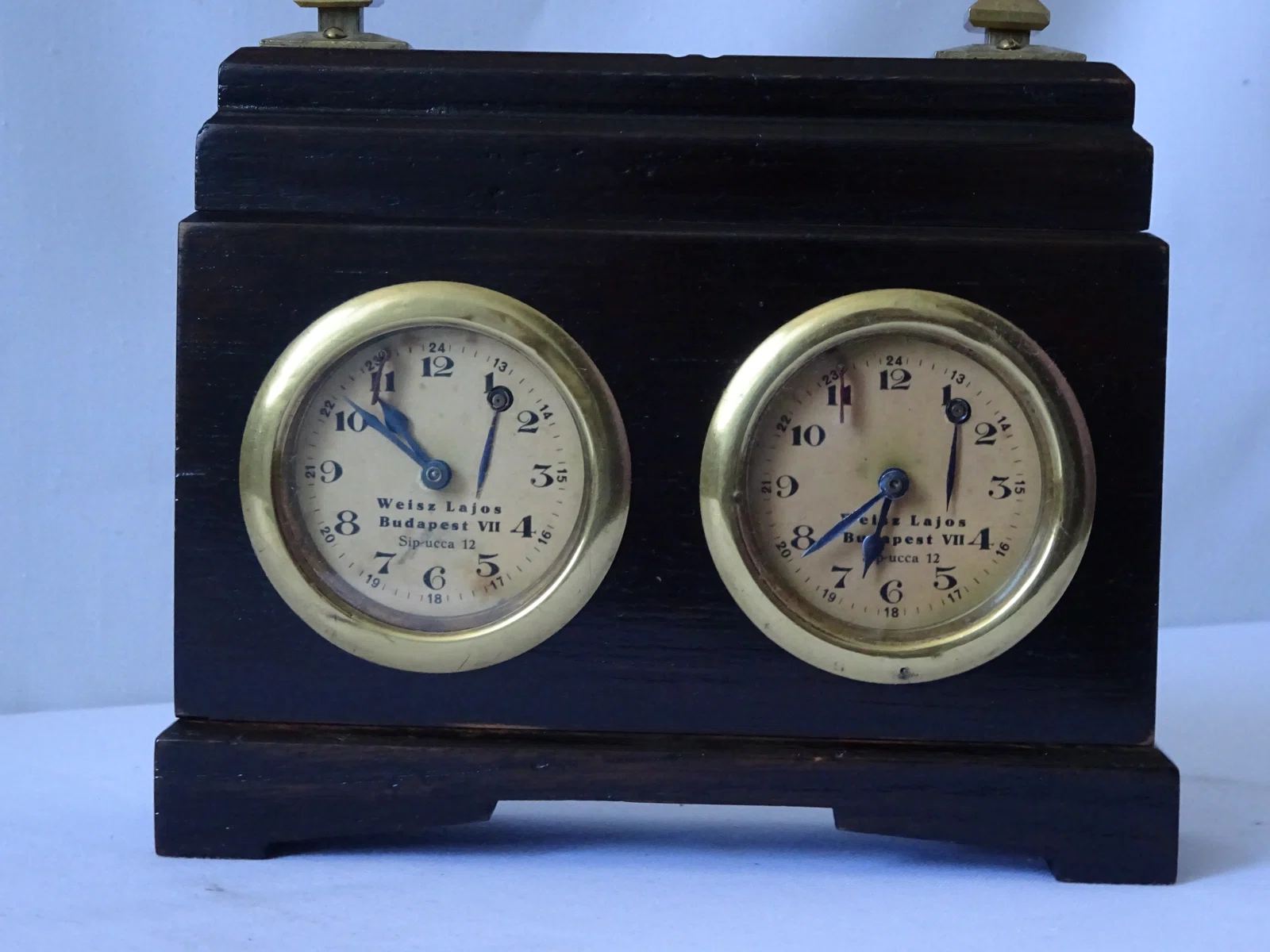
Weisz Lajos
The first clearly identified Hungarian chess-clock maker, representing the workshop stage before state industrial production.
Read the History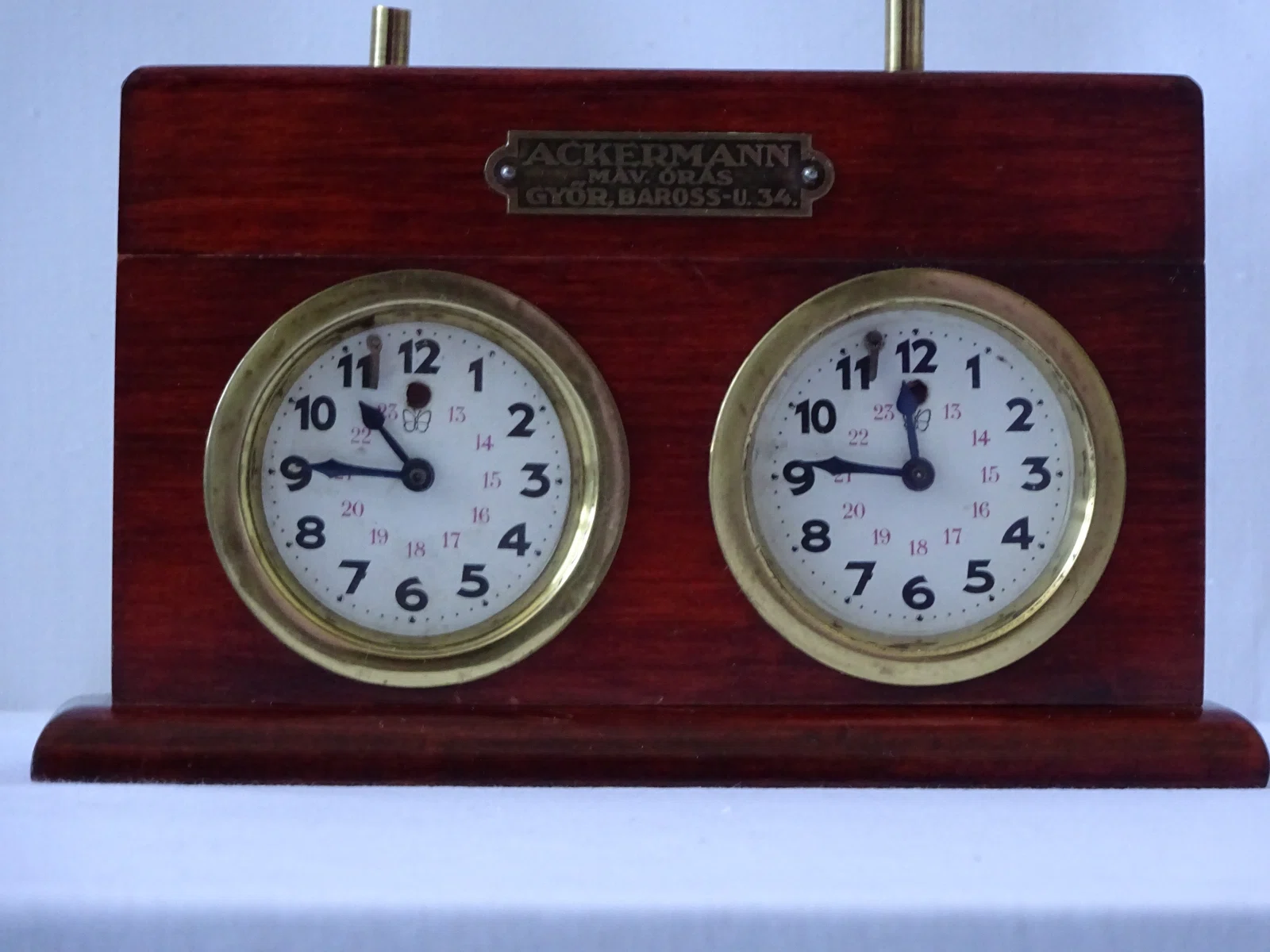
Ackermann István
A Győr watchmaker, chess-circle participant, supplier, and possible maker who shows that early Hungarian timing networks extended beyond Budapest.
Read the History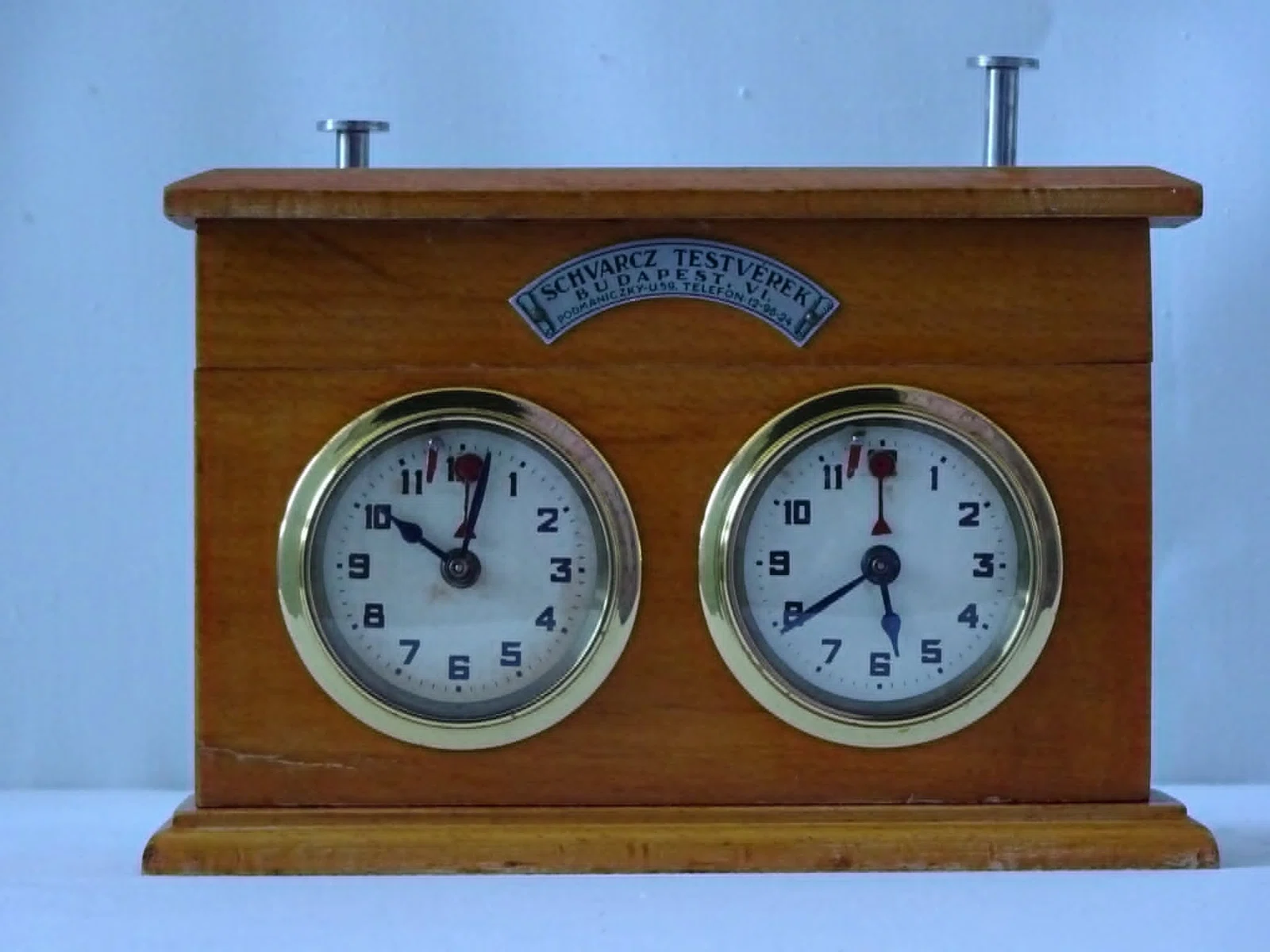
Schvarcz Brothers
A Budapest watch and clock retailer that supplied the import layer of Hungarian chess timing before domestic factory production.
Read the History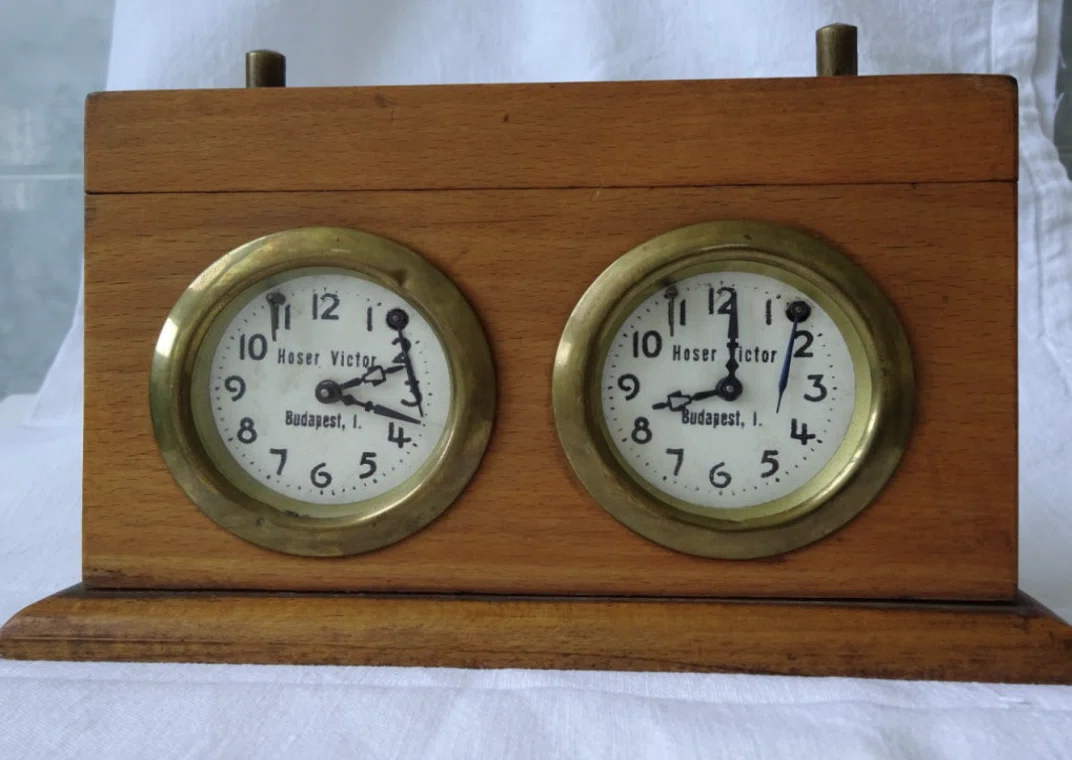
Hoser Victor Jr.
A high-skill Budapest precision watchmaker who made chess clocks before industrial factory production became dominant.
Read the History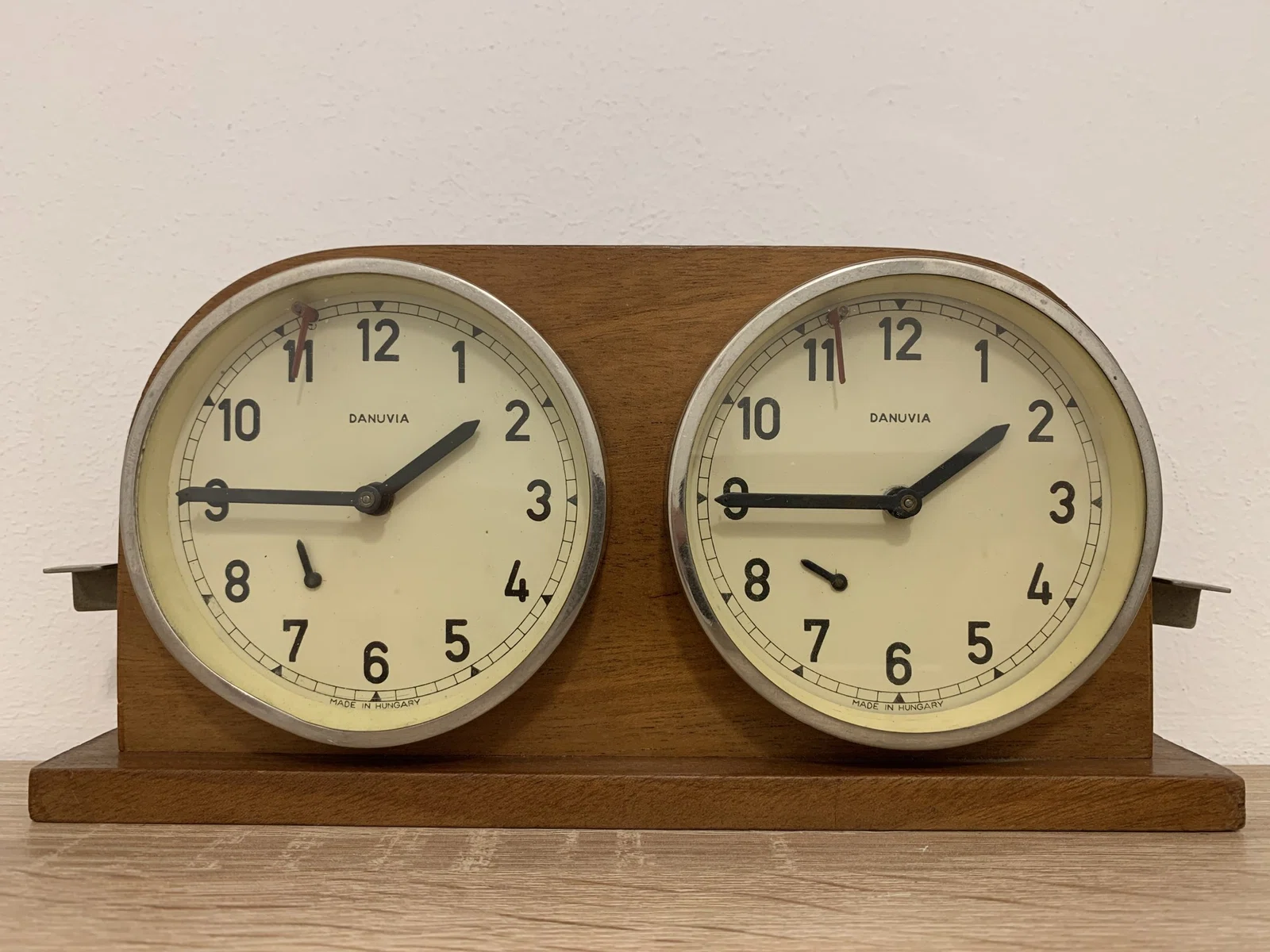
Danuvia
The industrial bridge between Hungary's craft-era clocks and the mature postwar factory families that followed.
Read the History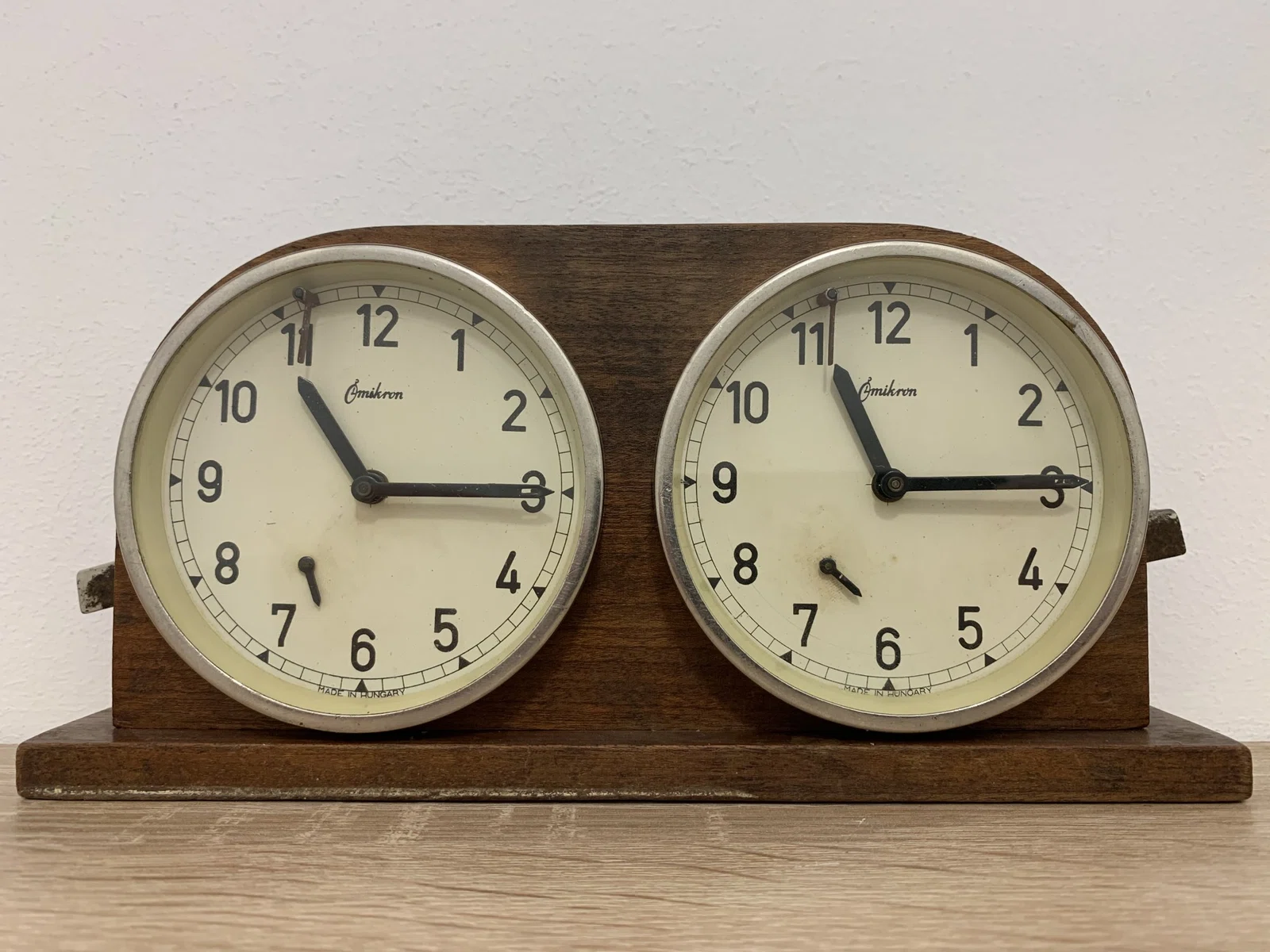
Óragyár / Omikron
The closest factory relative of Danuvia, preserving the same mechanical lineage under a new state-industrial identity.
Read the History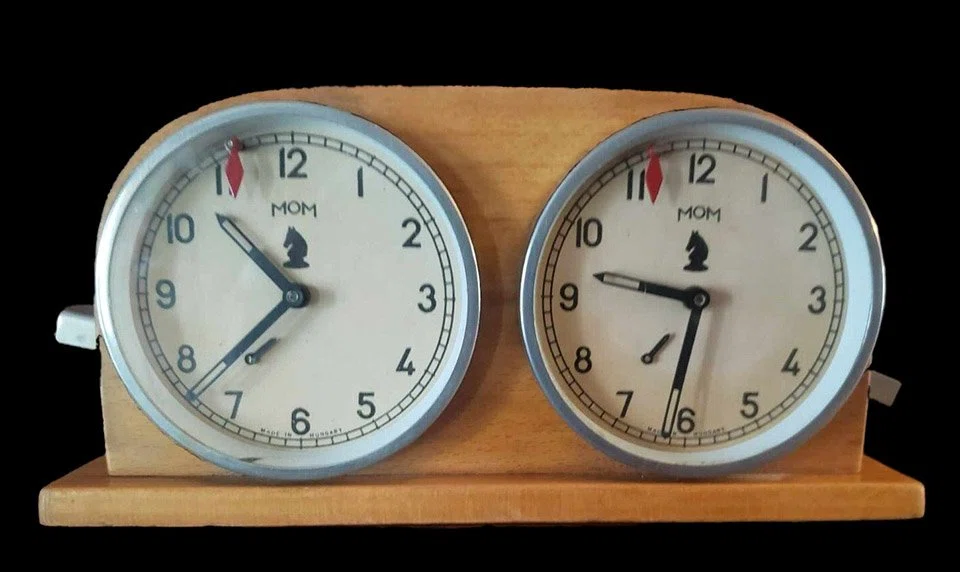
MOM
Magyar Optikai Művek became the mature Hungarian factory producer, turning inherited postwar technology into a standardized, export-conscious chess-clock industry.
Read the History