
A Deep Chess and Horological Tradition
Chess in the Czech lands is documented from the medieval period, while Prague's astronomical clock and other early public clocks testify to a long horological craft tradition. By the late nineteenth century, chess clubs and technical watchmaking education were both well established.
Illustrated record
From Czech Clubs to Czechoslovak Mass Participation
After 1918 organized chess expanded rapidly. Czechoslovakia became a founding member of FIDE, hosted the 1931 Olympiad, and eventually supported hundreds of clubs and tens of thousands of registered players. This dense competitive culture created persistent demand for clocks.
Illustrated record
The membership figures show three distinct phases rather than one uninterrupted growth line. Organized chess in the Czech lands was still comparatively small before the Second World War, rose from 2,907 members in 1940 to about 16,000 by the end of 1945, and reached roughly 34,000 registered members under the late Czechoslovak socialist sports system in 1987. After the breakup of Czechoslovakia, the Czech Republic settled at a lower but still substantial level: 20,174 total members, including 13,157 active players, in 2003 and 19,321 members, including 13,721 active players, in 2018. The post-1987 decline therefore partly reflects a different state and organizational structure, not simply the disappearance of chess.
The club count tells the same institutional story. The Czech lands grew from 148 clubs in 1940 to about 450 chess societies by the end of 1945, while the Czechoslovak system eventually reached roughly 1,200 chess sections or clubs in 1987. The 518 active clubs reported for the Czech Republic in 2018 should not be treated as directly comparable one-for-one with the Czechoslovak total: it covers only the Czech successor state and a different federation structure. What remains clear is the density of organized chess infrastructure capable of sustaining regular tournament play and its equipment.
Veselý Before Czechoslovakia
Václav Veselý represents an early Prague-area maker from the Austro-Hungarian period. His clocks used imported German movements and distinctive cases, demonstrating that local chess-clock identity could form around foreign mechanical cores even before the new state existed.
Václav Veselý - Early Czech Chess Clock
German Industry Inside Czech Territory
Kienzle's Chomutov branch illustrates the complexity of industrial nationality. The company was German, but its factory operated in Bohemia and then interwar Czechoslovakia. Chess clocks produced in that context belong to the Czechoslovak industrial landscape without turning Kienzle into a Czech company.
Kienzle - German Brand, Czechoslovak Production Context
Chronotechna Consolidates the Industry
After World War II, private firms and confiscated German-linked factories were reorganized into a state clock system. Chronotechna, founded in 1946, became the central platform for alarm-clock and clock production at Šternberk.
Illustrated record
Workshop Meets State Movement
Josef Voda used Chronotechna movements in a small-series chess clock advertised in 1948 and documented in 1950 tournament use. The product neatly bridges private finishing or assembly with state-manufactured mechanical cores.
Josef Voda Chronotechna - A Rare Example of an Early Kienzle
Tempo, Radio, and Exacta
Chronotechna-related clocks appeared in several forms, including Tempo and the distinctive radio-shaped Bakelite model. Exacta is especially important because surviving examples bridge Kienzle Chomutov markings and Chronotechna-linked forms, making the object family a physical link across nationalization.
Exacta Chess Clock, Kienzle-Marked Example
PRIM and Gambit
The broader state horological system eventually produced the PRIM identity and the Gambit chess clock. Gambit appears to have entered production in the early 1960s, later appearing under Jerger and, more rarely, Hanhart branding through distribution or cooperation relationships.
PRIM Gambit, Jerger, and Hanhart
The Gambit Line
The Gambit clock is described by collector documentation as a Chronotechna design from Czechoslovakia, later appearing under the PRIM name. Its development appears connected to competition with the East German Ruhla Gardé, introduced at the 1960 Leipzig Olympiad. The Gambit shared some broad design similarities, but was not simply identical. Production reportedly began in the early 1960s. The PRIM Gambit must predate 1969, because surviving clocks use the older PRIM logo, replaced that year.
German Connections
The Jerger Gambit appears to reflect cooperation or distribution with the German firm Jerger, rather than a literal takeover of PRIM during the Cold War. Jerger-branded distribution reportedly ended around 1970, making the Jerger version much rarer than the ordinary PRIM Gambit. In the 1980s, Hanhart briefly entered the picture as Chronotechna struggled; the Hanhart Gambit is likely the rarest version, with the same front design but a black case and Hanhart branding.
Illustrated record
Historical Sequence
The Czech story is defined by institutional transformation. A regional craft and workshop tradition coexisted with German industrial factories; postwar nationalization absorbed those assets; state enterprises then developed distinct Czechoslovak designs whose later branding again crossed international borders.
Chronotechna Chess Clocks: Tempo and Radio
Surviving Variants
The Tempo Chronotechna appears to be an early Chronotechna-family chess clock, but its exact production date and model history remain unclear. The radio-shaped Chronotechna is especially unusual because of its molded bakelite case, giving it a more modern consumer-product appearance than traditional wooden chess clocks.
Interpretation
These clocks suggest Chronotechna-related chess clock production was broader than one standard tournament model. The evidence is mostly object-based rather than catalogue-based, so the exact sequence between Tempo and radio-shaped Chronotechna should be treated cautiously.
Takeaway
Chronotechna appears to have been the central postwar platform for several distinct Czechoslovak chess-clock designs.
Illustrated record
Further visual record
Additional surviving objects, documentary images, advertisements, and data from this national history.
Václav Veselý - Early Czech Chess Clock
Explore this national record
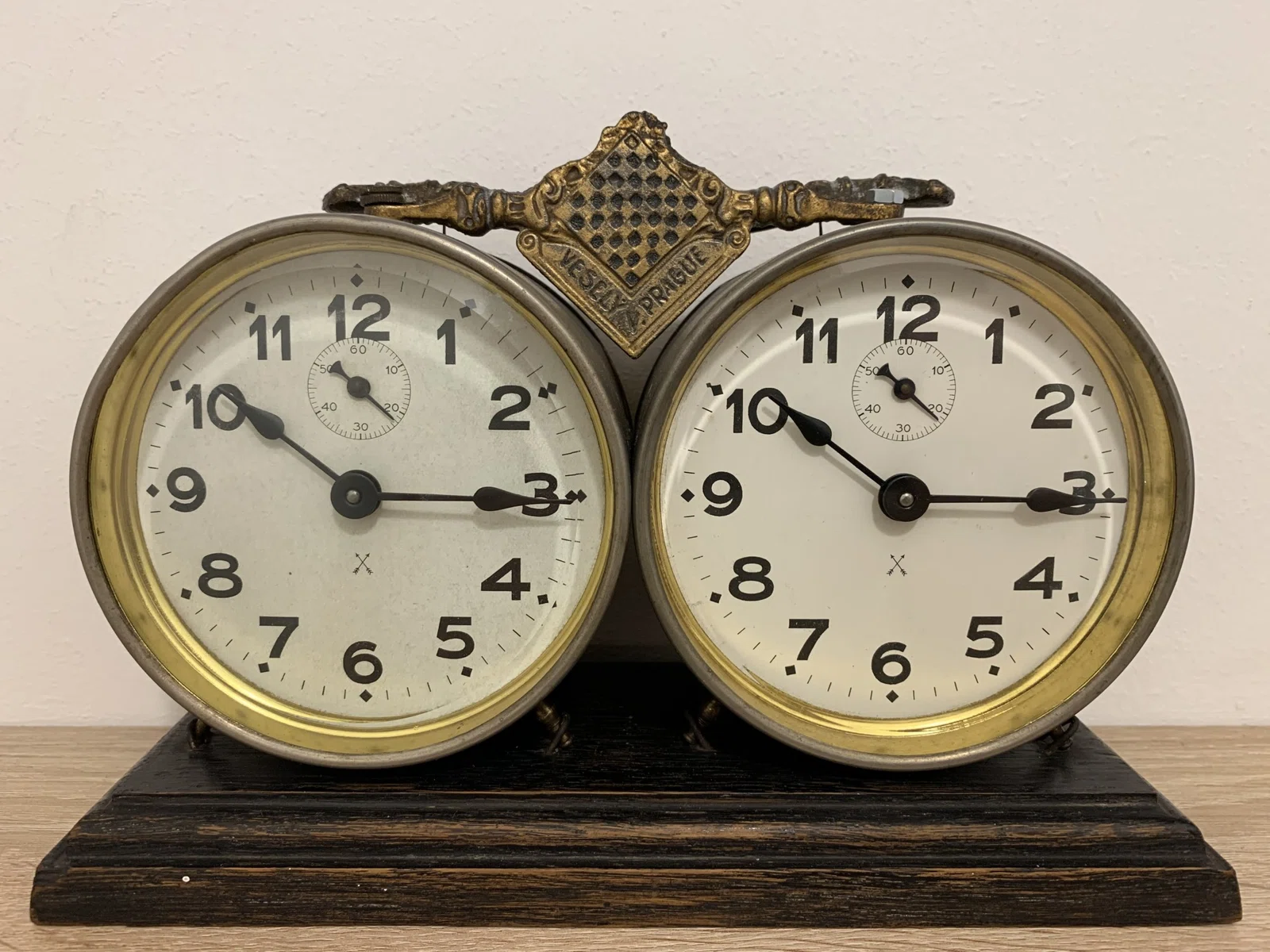
Václav Veselý
An early Prague-area chess-clock maker whose clocks combined local construction and branding with German industrial movements.
Read the History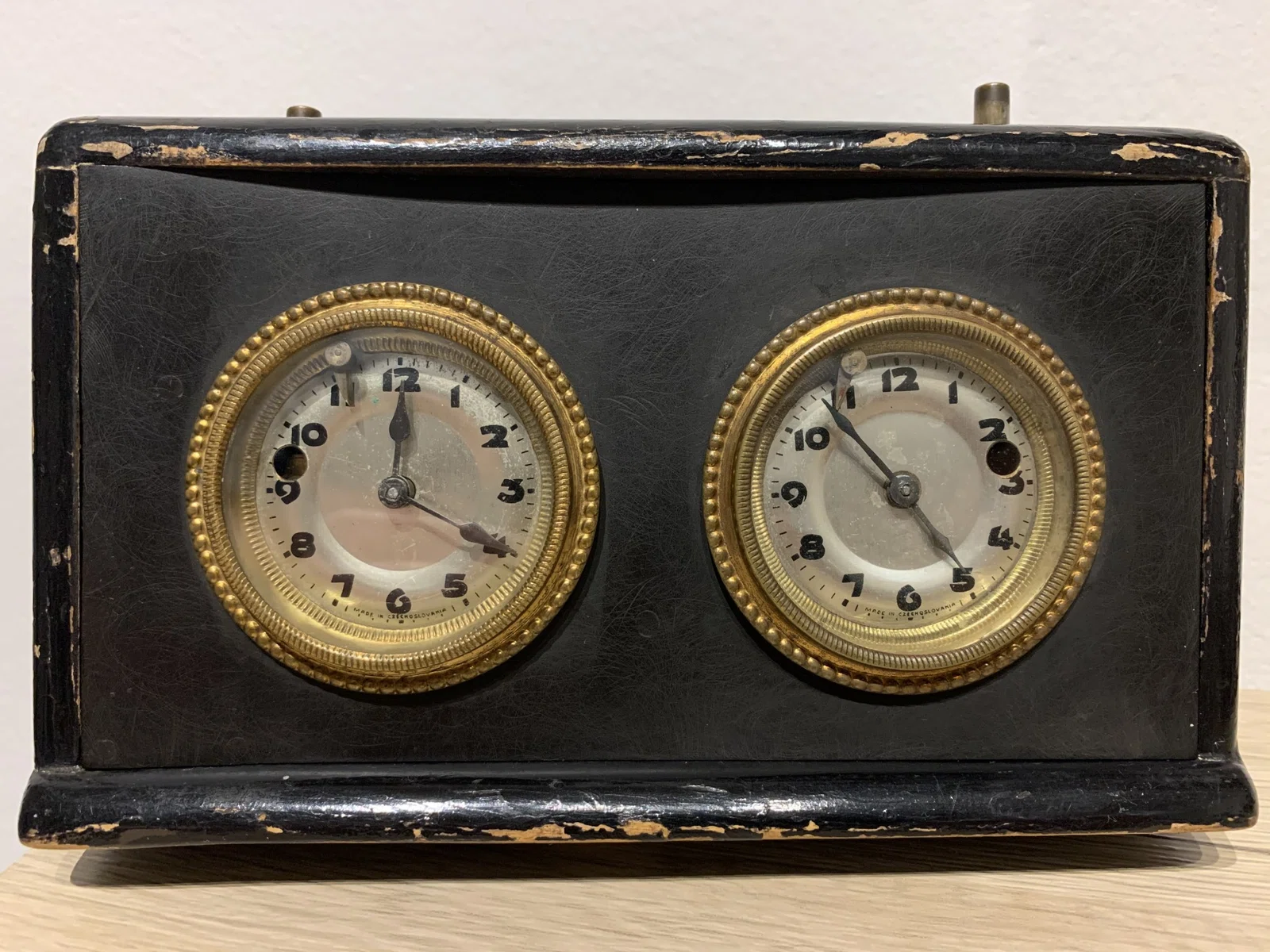
Kienzle — Czechoslovak Production Context
A German company whose Chomutov branch became part of the industrial landscape inherited by postwar Czechoslovakia.
Read the History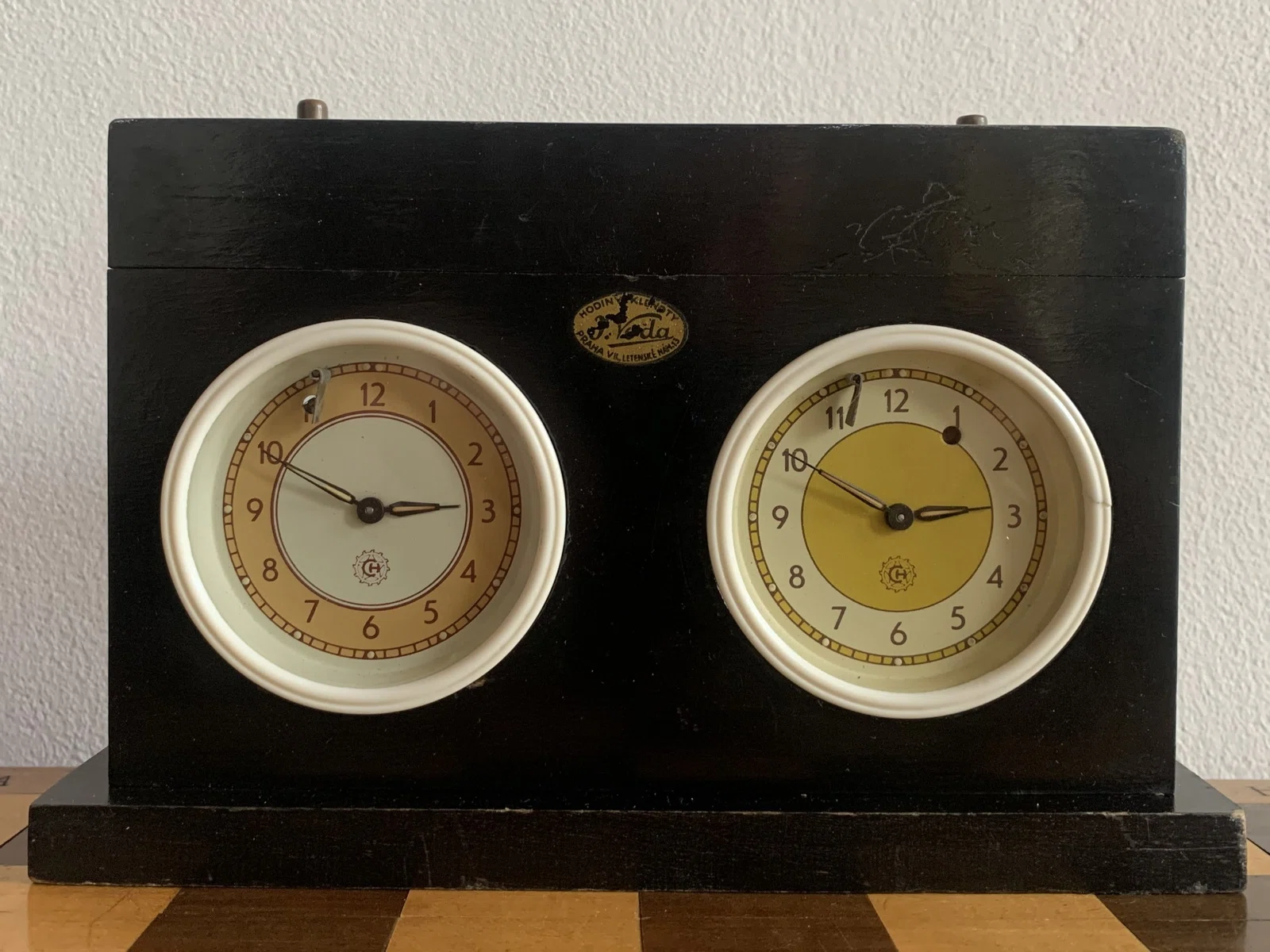
Josef Voda / Chronotechna
A rare small-series chess clock that pairs private Prague workshop production with movements from the new Czechoslovak state clock industry.
Read the History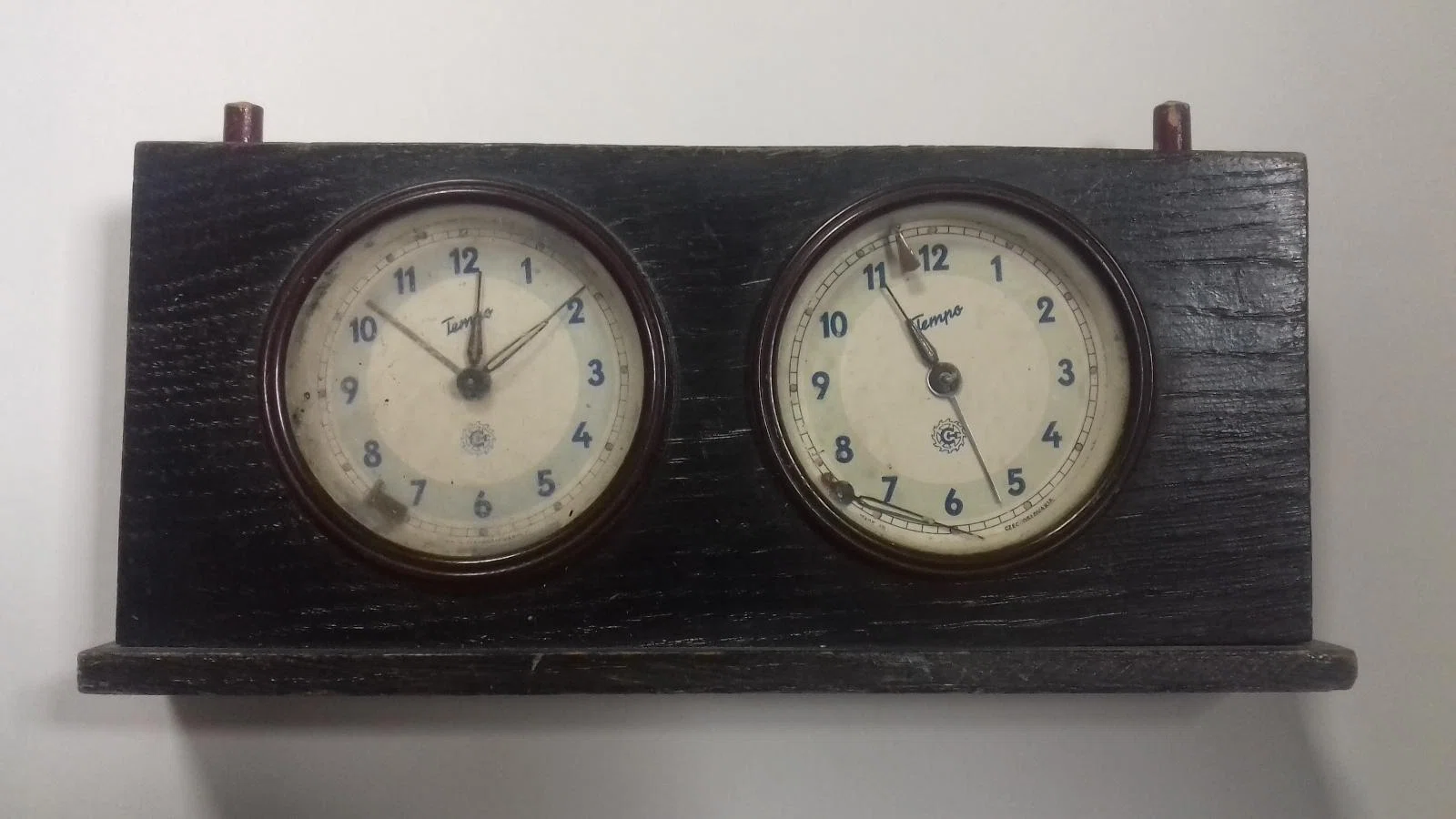
Chronotechna — Tempo and Radio
Two object families that show the postwar state platform producing more than one standardized chess-clock form.
Read the History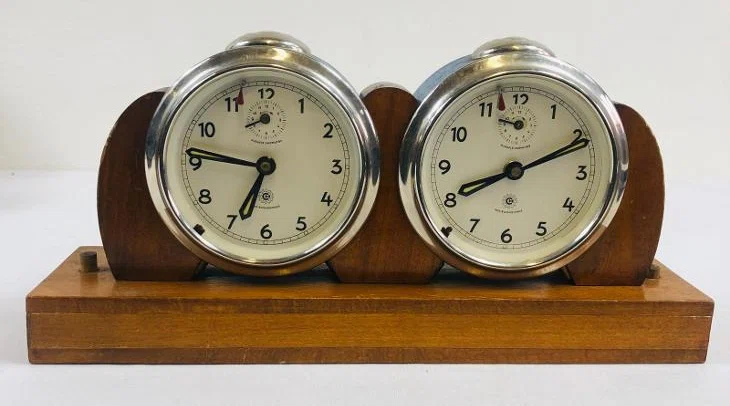
Exacta
The strongest surviving object-level bridge between the German Kienzle Chomutov factory and early Chronotechna-era chess-clock production.
Read the History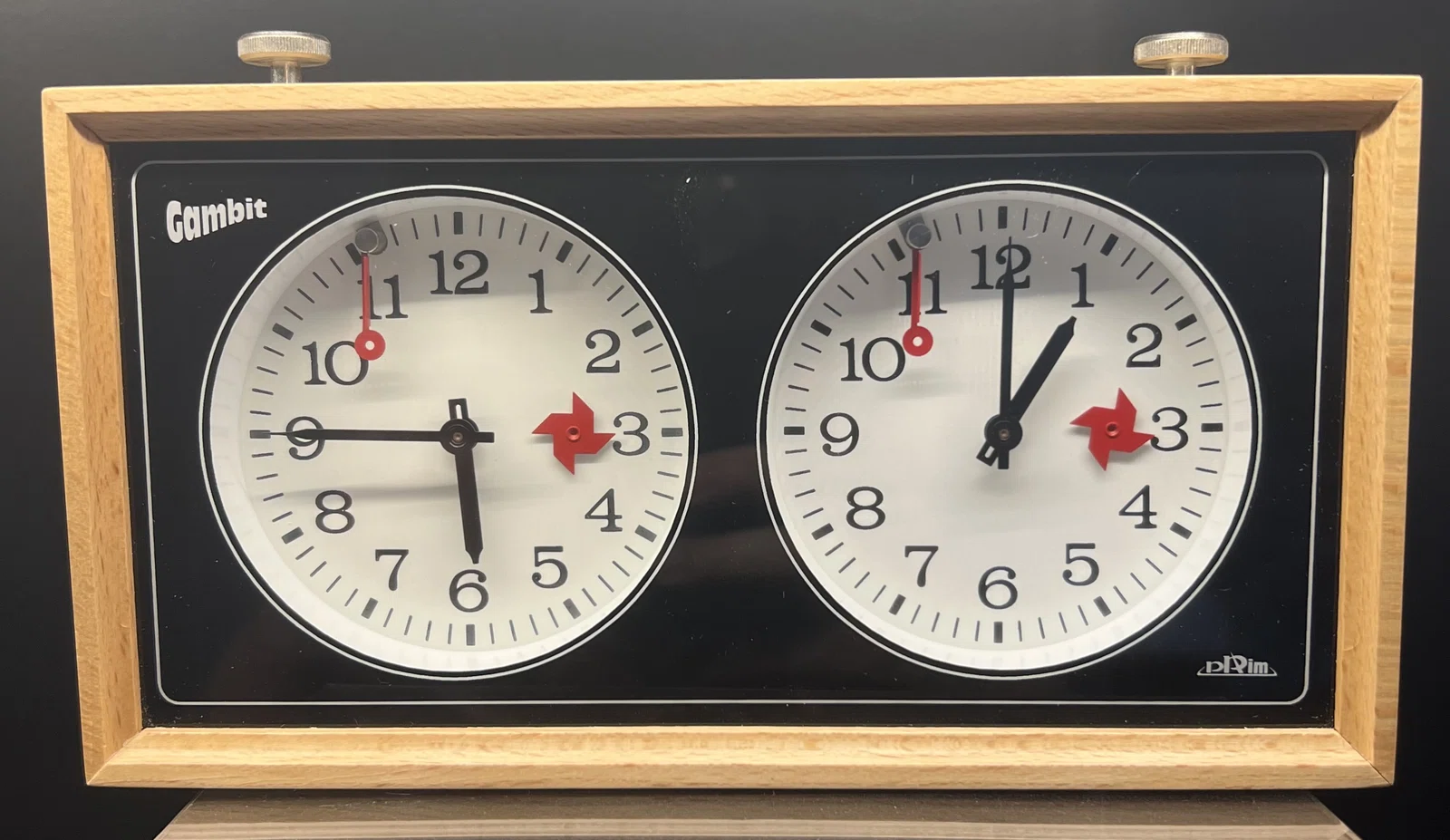
PRIM / Gambit / Jerger / Hanhart
A Czechoslovak design that moved through state manufacture and later German branding relationships without losing its underlying identity.
Read the History