
From Clubs to a National Chess Culture
The Netherlands developed organized chess early. Its first chess club dates to 1803, the Dutch Chess Federation was founded in 1873, and Dutch administrators became influential internationally—most notably Alexander Rueb, FIDE's first president. Max Euwe's 1935 world championship victory triggered a national chess boom: federation membership rose sharply and the number of clubs expanded dramatically before the Second World War.
Illustrated record
A Horological Tradition Built on Precision and Trade
Dutch timekeeping history is equally deep. Christiaan Huygens' practical pendulum clock of 1656 transformed mechanical accuracy, while regional traditions in the Zaan region and Friesland sustained distinctive clockmaking cultures. Unlike Germany's increasingly concentrated factories, Dutch production often remained rooted in family workshops, specialized trades, local cases, and imported components.
Illustrated record
Why Early Dutch Clocks Are Hard to Attribute
That production structure helps explain why many early Dutch chess clocks are unbranded or mechanically mixed. A locally constructed case might contain a German movement; a retailer might apply its own name; a finished clock could circulate without preserving the identity of the workshop that assembled it.
The San Sebastián Mystery
The clock collectors call the 'San Sebastián' type captures this uncertainty perfectly. It is documented in tournament use from 1911 onward and appears in later European and Soviet chess photographs, but no manufacturer has been securely identified. Different surviving examples contain different movements, including German Kienzle mechanisms. The Dutch attribution remains plausible rather than proven.
The ‘San Sebastián’ Clock: The Mysterious ‘Possibly Dutch’ Wonder
Koopman Creates a Documented Dutch Line
H. Koopman of Dordrecht, beginning around 1936, represents the clearest shift from anonymous workshop clocks to documented Dutch production and distribution. Koopman clocks appeared in multiple case forms over decades and often carried date and warranty stamps that make surviving examples unusually datable. The company also used imported movements and sold foreign-made clocks, making it a manufacturer, assembler, brand, and distributor rather than a simple vertically integrated factory.
Illustrated record
Retailers and Small-Series Makers
Zilwo illustrates the Dutch retailer layer: surviving branded clocks exist, but whether Zilwo manufactured, assembled, or merely distributed them remains uncertain. Kallisto, by contrast, is a well-defined small-series product: Frans van de Eng made roughly 50 handmade electric analog clocks in three series during the second half of the 1980s.
Kallisto
A Dutch Historical Sequence
The Dutch story is therefore one of commercial flexibility. Strong organized chess created demand; a workshop-oriented horological culture supplied cases and assembly; imported German and Swiss mechanics filled gaps; retailers created product identities; and small makers continued experimenting well into the electric era. The result is a national tradition whose complexity lies precisely in the separation between mechanical origin and market identity.
Further visual record
Additional surviving objects, documentary images, advertisements, and data from this national history.
Kallisto
Explore this national record
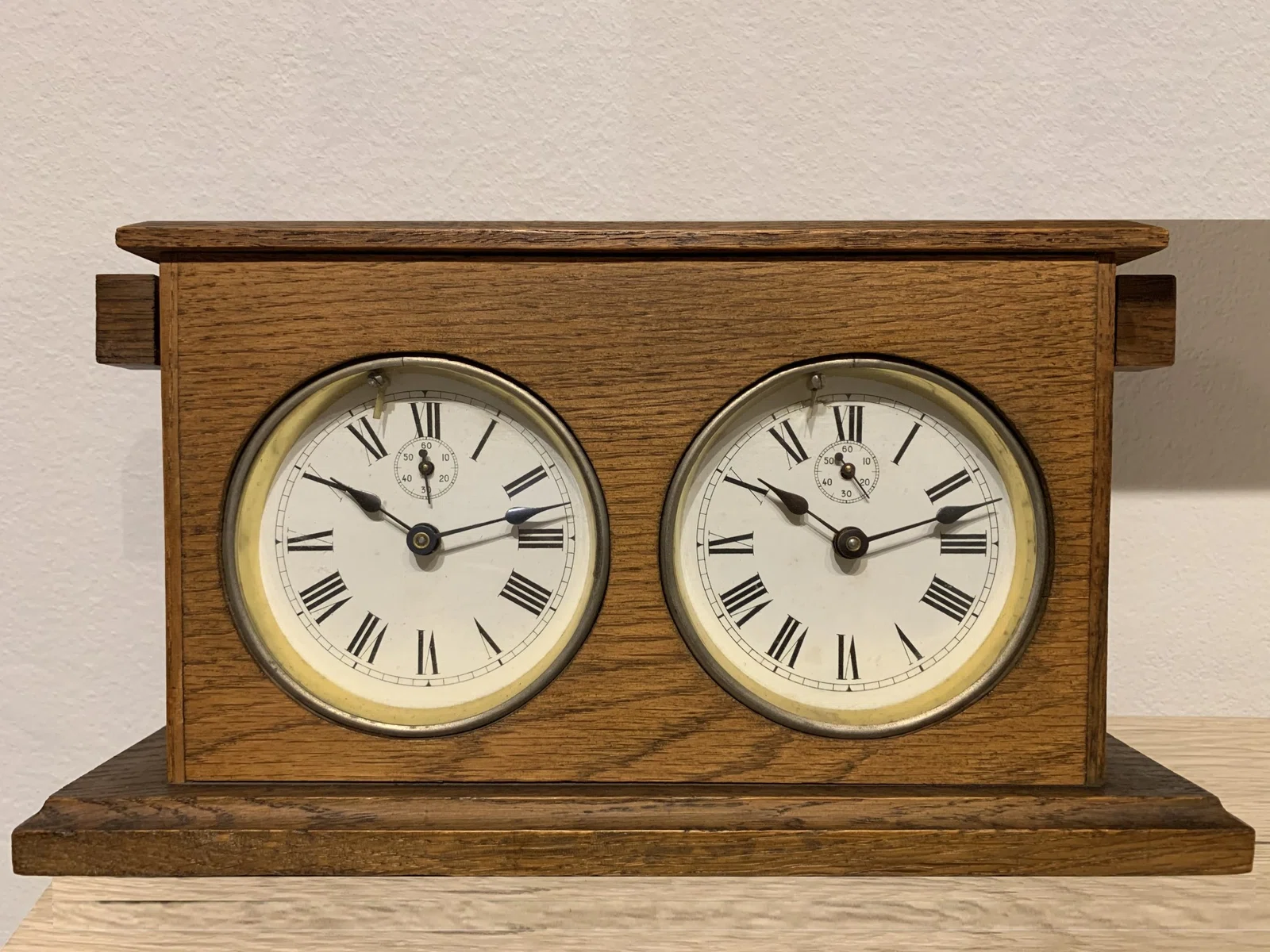
The San Sebastián Clock
One of the most recognizable early continental chess clocks remains one of the hardest to attribute.
Read the History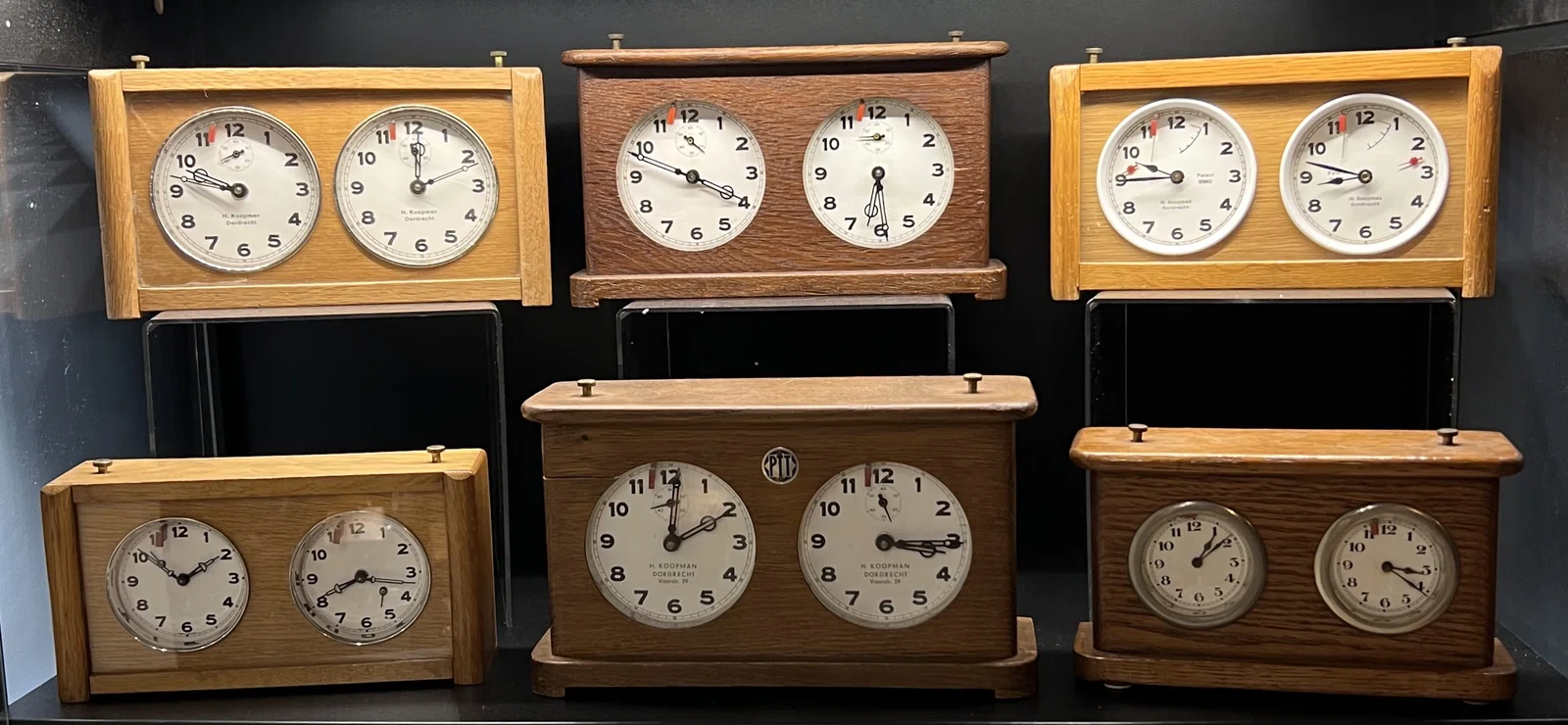
H. Koopman
The best-documented Dutch mechanical chess-clock maker also illustrates the Netherlands' broader commercial habit of importing components, adding value locally, and redistributing finished goods.
Read the History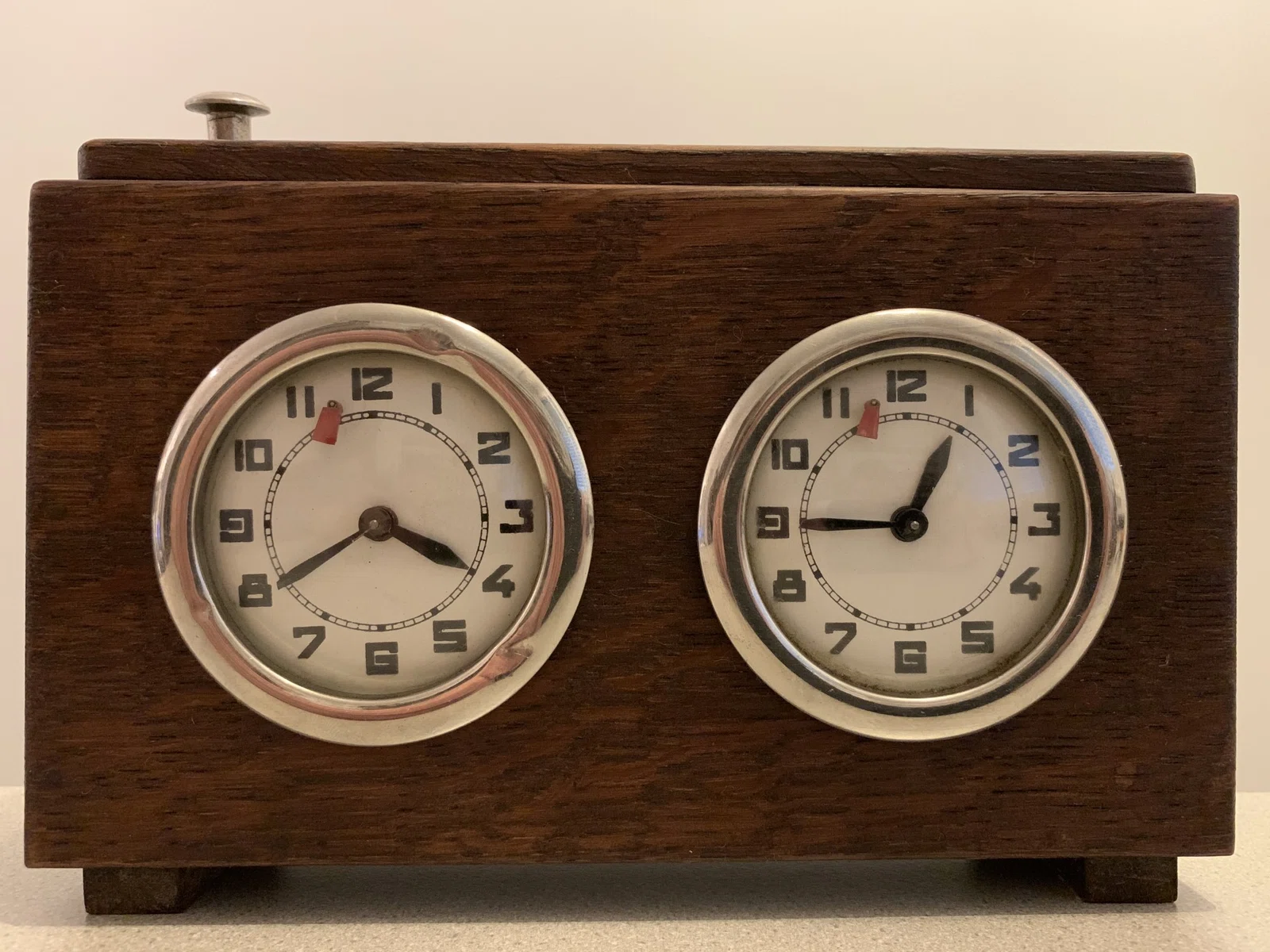
Zilwo
A Leeuwarden jeweler and optical retailer whose branded clocks demonstrate how retail identity could become part of Dutch chess-clock history.
Read the History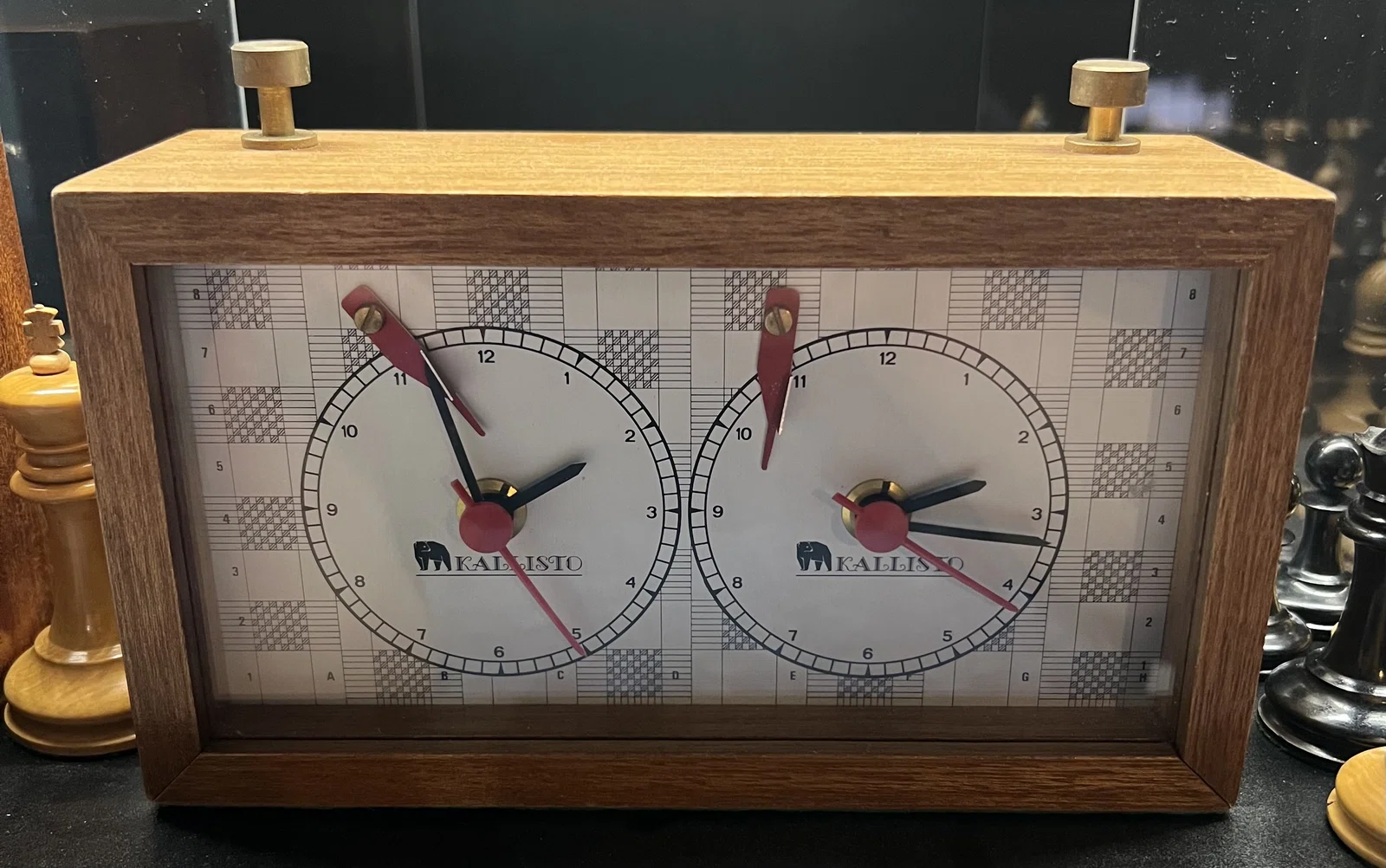
Kallisto
A handmade Dutch electric analog chess clock that preserved the familiar two-dial form while changing the technology inside.
Read the History