
From Karlstein Household Craft to Regional Industry
Austria's continuous clockmaking tradition around Karlstein is traced to about 1730, when transferred knowledge from the Bohemian Forest took root in a region where harsh agricultural conditions encouraged household craft. By the 1830s and 1840s, roughly 100 families participated in production and annual output was reported near 140,000 clocks. The district functioned as a proto-industrial network: specialized households made frames, dials, wheels, decorations, springs, and other parts before final assembly.
Illustrated record
Industrial Pressure and Technical Education
After 1848, Black Forest competition exposed the weaknesses of labor-intensive Austrian production. Employment and sales collapsed, prompting a government-supported teaching workshop in Karlstein in 1873. Under Curt Dietzschold, the school became a precision-engineering institution that trained students to make nearly every component themselves. Technical education became Austria's answer to industrial competition.
Crisis and the Austrian Response: Technical Education
Factories, Vienna, and Ebensee
From about 1880 named manufacturers appeared in Karlstein, while Vienna and Graz maintained a parallel tradition of high-skill precision and decorative horology. The clearest large factory breakthrough came at Ebensee, where Gebrüder Resch developed an integrated plant and delivered its 100,000th clock in 1885. Junghans acquired the operation in 1901, placing Austrian production inside a larger Central European industrial system.
Illustrated record
War and Contraction
The First World War broke much of this momentum. Ebensee converted to munitions work and complete clock production effectively ended in the early 1920s. The breakup of Austria-Hungary also shattered the markets that had supported Karlstein. Austria retained skilled workshops and precision traditions, but no longer possessed the same expanding clock industry.
War, Imperial Collapse, and Industrial Contraction
Vienna Becomes a Major Chess Center
Austria's chess culture was unusually strong. Vienna supported coffeehouse chess, the Wiener Schachgesellschaft from 1857, international tournaments in 1873 and 1882, a powerful press, elite masters, and major patrons. By the early twentieth century Vienna had one of Europe's richest chess ecosystems. The interwar republic rebuilt national organization after 1920, maintaining strong clubs and international competition even in a smaller state.
Illustrated record
The Wienerin: Chess Timing as Instrument and Luxury Object
The 1932 Wiener Schach-Zeitung equipment catalog offered two named clocks: the standard Wienerin and the premium Wienerin-Lux. The seller described precision mechanisms, side controls, flags, pearwood or mahogany cases, and a clear price hierarchy. The actual manufacturer was not named, so the clocks are best understood as a commercially branded Vienna line rather than securely identified factory products.
Wienerin / Wienerin-Lux - Vienna’s Two-Tier Chess-Clock Line
Rudolf Draxler and the Workshop Trade
Rudolf Draxler, a Viennese watchmaker, is documented in connection with flag clocks ordered for the 1924 Győr Chess Congress. The surviving Draxler-attributed family varies in case and dial details, consistent with workshop-scale manufacture or assembly. His importance comes from the documentary chain connecting a named watchmaker, an address, regional distribution, and serious tournament use.
Vienna Supplies Győr
Rotpunkt and Specialist Experimentation
Joh. Tauchbauer's Rotpunkt is one of Austria's most distinctive clocks. The aluminum case, proprietary 'Patent angem.' marking, integrated dial plate, and optional central move counter point to a small specialist producer experimenting far beyond the conventional wooden club clock. Collector speculation that the aluminum came from wartime aircraft is plausible in the abstract but remains unproven; nearby postwar aluminum production provides an equally credible supply path.
Illustrated record
The Side-Pushbar Tradition
Several Austrian clocks of uncertain manufacture share a regional construction language: solid wooden cases, side controls, separated upper sections, and imported German movements. Newspaper fragments and institutional stamps document assembly, repair, and use over several decades. These clocks are best treated as a workshop family rather than forced into one fictitious maker.
Illustrated record
Layered Nationality
Junghans and Kaiser movements appear inside Austrian cases, and similar clocks can contain different mechanisms after decades of repair. Much of Austria's contribution therefore occurred in case construction, switching systems, assembly, sale, repair, and tournament use. A finished clock can be meaningfully Austrian even when its movement was made in Germany.
Made in Austria… or Assembled in Austria? - Foreign Movements and Local Workshop Production
Historical Sequence
Austria's story is not dominated by one factory brand. It moves from a deep regional craft industry and Viennese precision culture into a fragmented chess-clock market of named products, specialist watchmakers, locally assembled clocks, and imported movements. That decentralized system is precisely what gives Austrian clocks their diversity—and what makes their attribution so demanding.
Illustrated record
Explore this national record
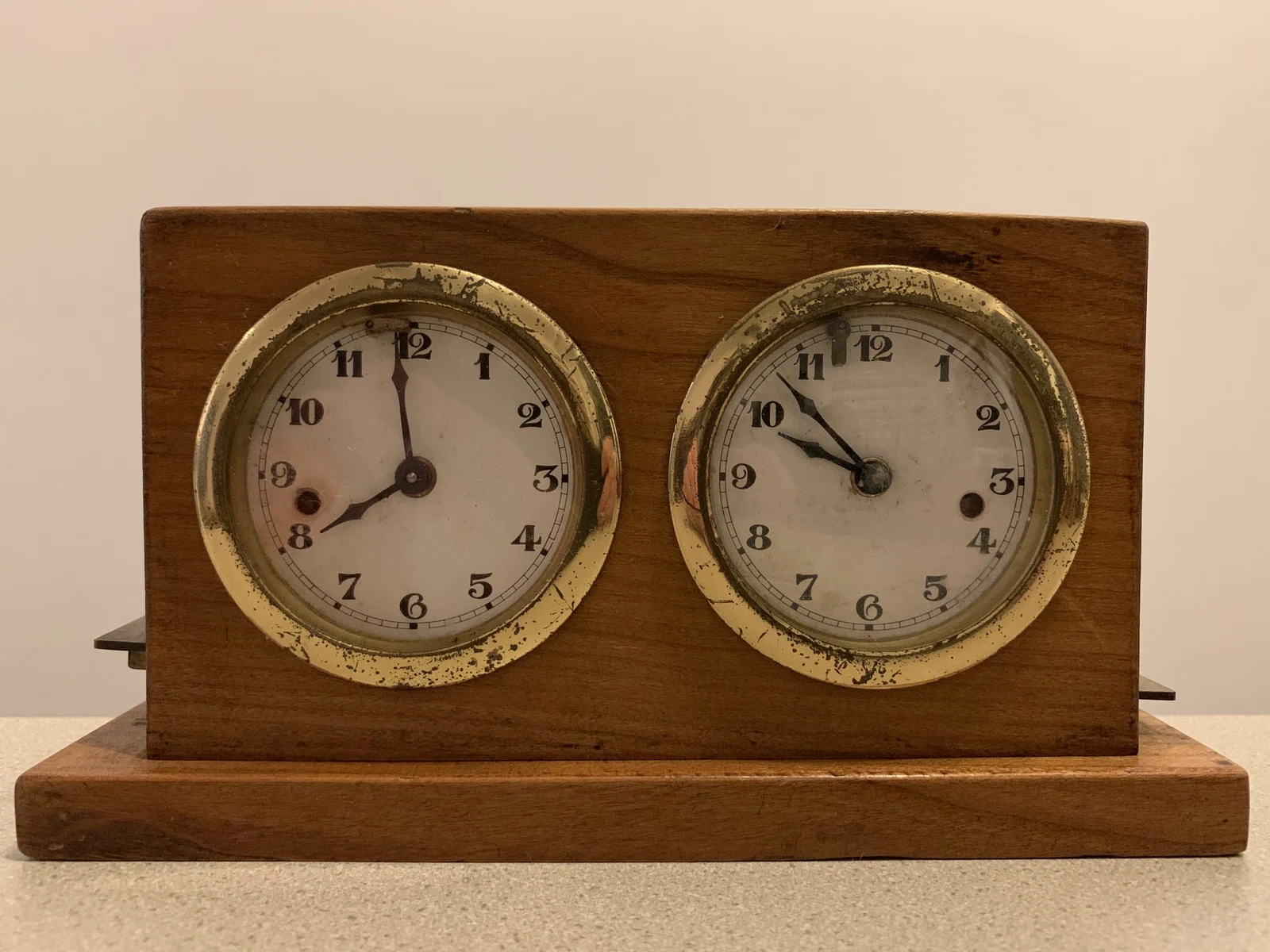
Wienerin / Wienerin-Lux
A 1932 Vienna chess-clock line that deliberately separated practical tournament equipment from a premium luxury version while leaving the actual manufacturer unnamed.
Read the History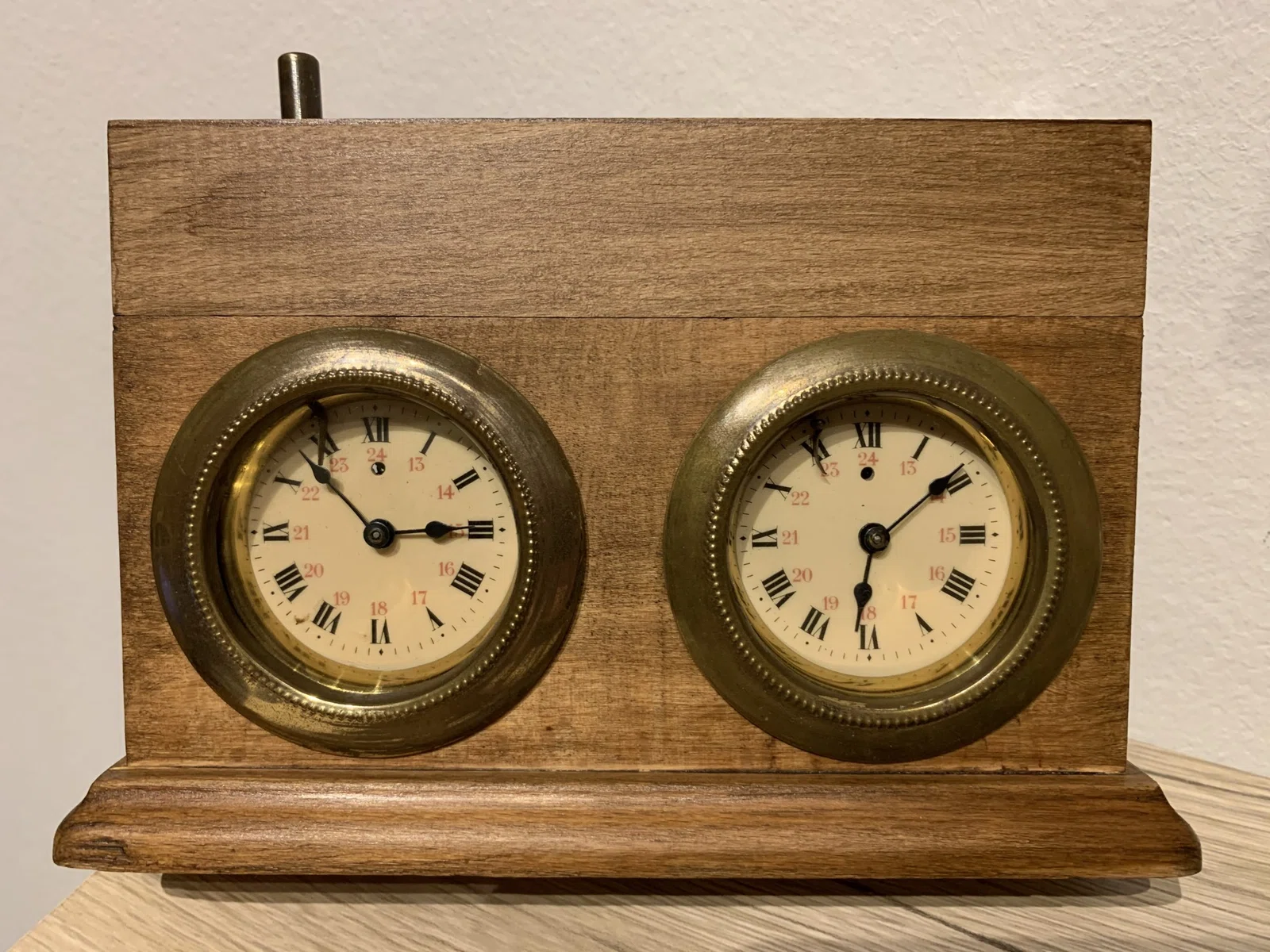
Rudolf Draxler
A Viennese watchmaker whose clocks can be traced through advertising, a documented tournament purchase, and cross-border distribution to Hungary.
Read the History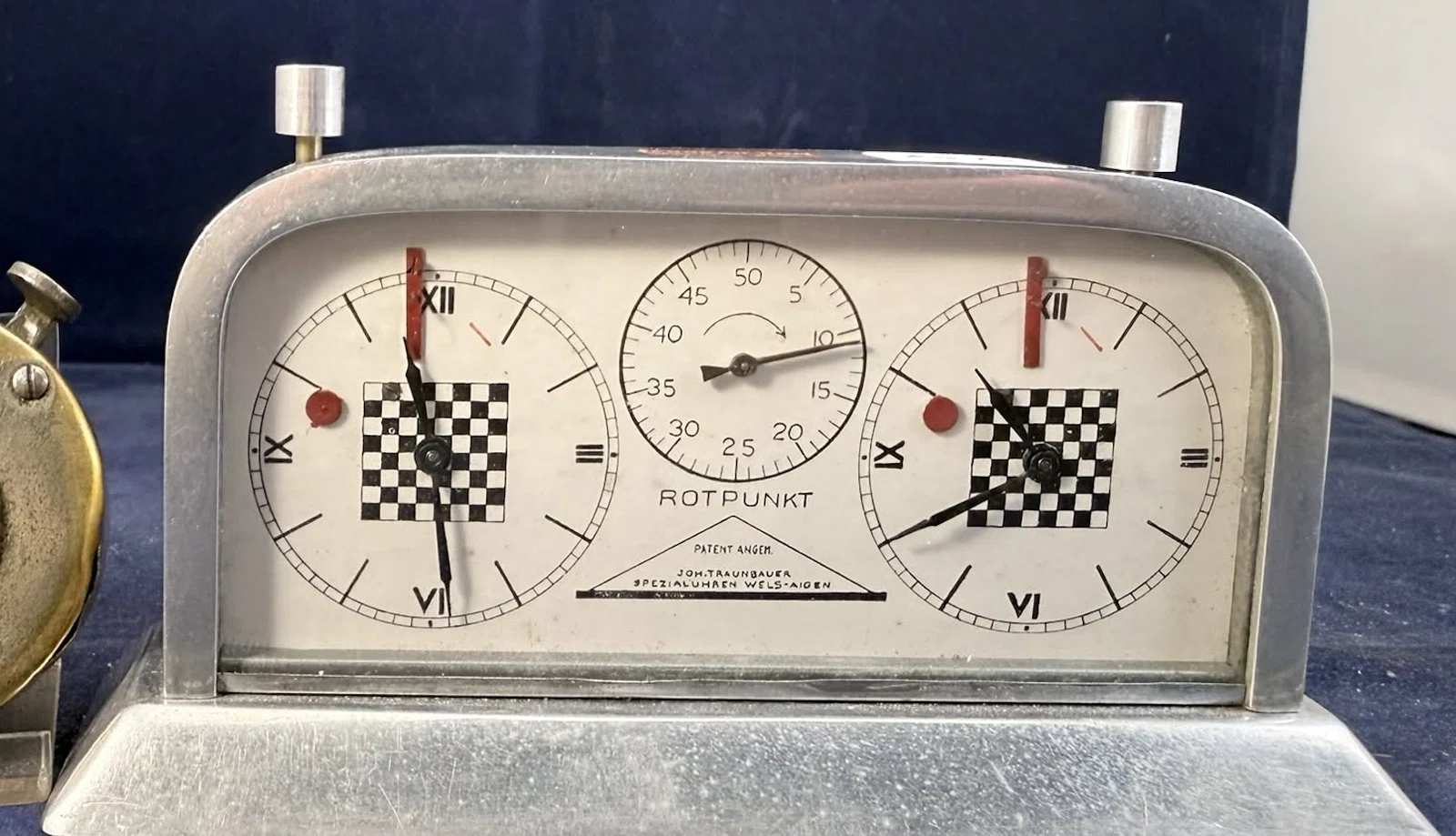
Rotpunkt / Joh. Tauchbauer
An Austrian specialty clock with aluminum construction, patent-pending branding, and an optional move counter that remains one of the country's most technically distinctive designs.
Read the History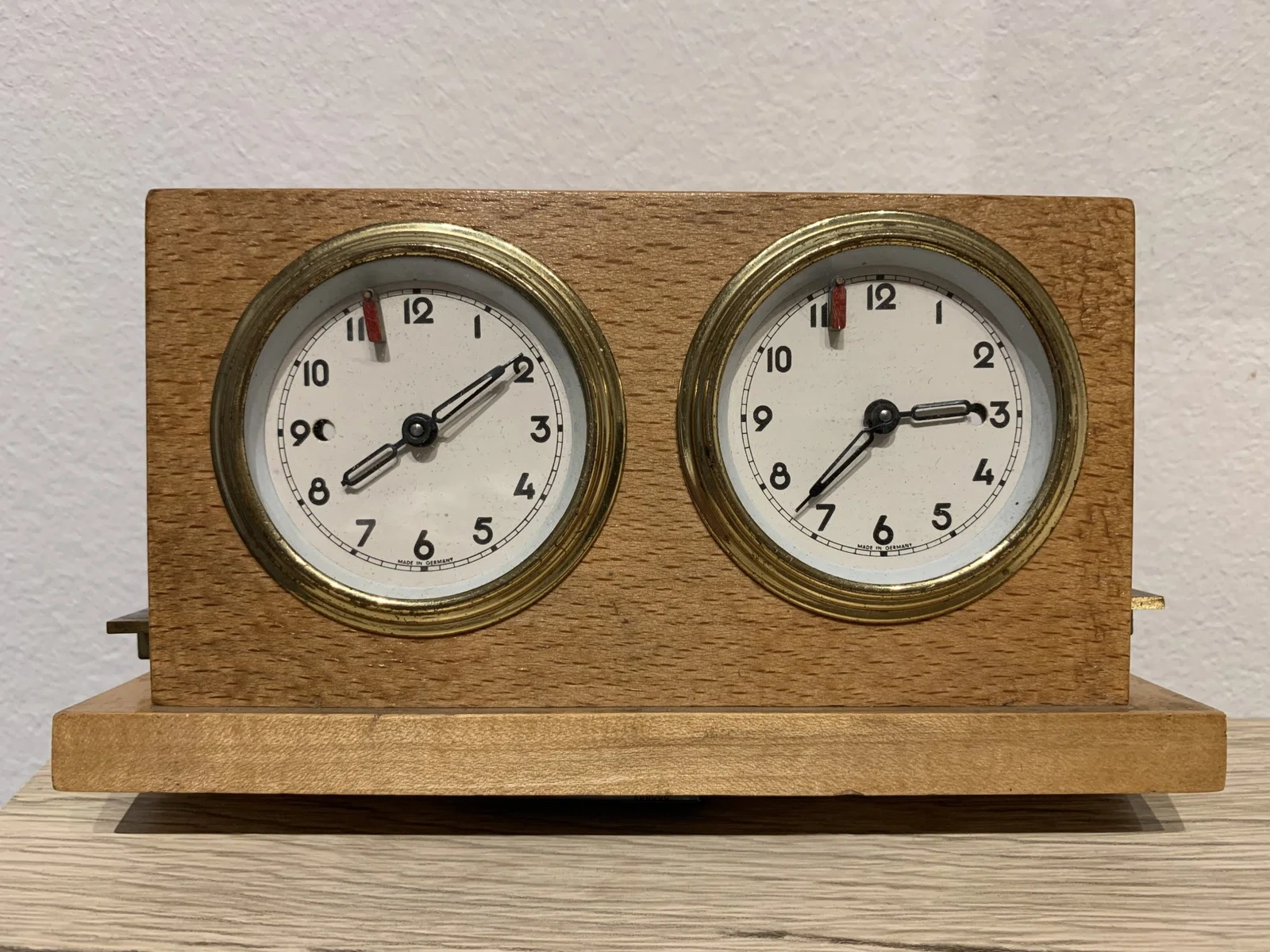
Austrian Side-Pushbar and Assembled Clocks
A regional family of workshop-built or adapted clocks whose Austrian identity often lies in the finished case and tournament life rather than in the imported movement.
Read the History