
A Growing Chess Culture Before 1939
Chess arrived in Argentina during the nineteenth century through European immigration, especially from Spain, Italy, and France. In Buenos Aires it became part of urban social life, played in cafés, clubs, and private circles. The Club Argentino de Ajedrez was founded in 1905 and became one of the principal institutions of organized chess in the country, while a national championship began in 1921.
By the 1920s and 1930s, Argentina possessed an active and visible chess culture, but it was not yet a major international power. Elite chess remained concentrated primarily in Europe. What Argentina did possess was the institutional foundation that would later make the country unusually important: clubs, competition, public interest, and a major urban chess center in Buenos Aires.
Argentina Before 1939
1939 Changes Argentine Chess
The turning point was the 8th Chess Olympiad in Buenos Aires in 1939, the first Olympiad held outside Europe. The surviving evidence describes the event as the largest and most international Olympiad to that point, with more than 27 participating teams.
During the tournament, the Second World War began. The Olympiad continued, but the geopolitical consequences transformed Argentine chess. A number of leading European players chose not to return home and remained in Argentina or elsewhere in South America. The surviving record names Miguel Najdorf, Erich Eliskases, and Gideon Ståhlberg among those affected. A major international tournament followed immediately in Buenos Aires, with nearly all of its participants remaining in the country.
The result was more than a temporary concentration of strong players. Clubs, institutions, tournament standards, and the level of everyday competition were strengthened by the sudden arrival of elite European chess culture.
The Seismic Impact of WWII
From Regional Strength to Global Power
In the 1940s and 1950s Argentina became one of the strongest chess nations in the world. The surviving record highlights Olympiad silver medals in 1950, 1952, and 1954, together with the continued strength of players such as Najdorf, Oscar Panno, and Héctor Rossetto.
Buenos Aires remained an important tournament city, while clubs and public playing spaces sustained a broad domestic chess culture. Although Argentina's relative international position declined from the 1970s onward as global competition intensified and the Soviet and European centers of elite chess became more dominant, the underlying chess culture remained durable.
This matters for chess-clock history because the country developed a large and sophisticated demand base for tournament equipment. By the postwar decades, Argentina was no longer merely importing the habits of European competitive chess. It possessed an established local system capable of supporting its own specialized chess-clock producers.
From Global Power to Enduring Chess Culture
Imported Clocks Before a Secure Domestic Industry
Surviving documentation records full use of mechanical chess clocks at the 1939 Olympiad and identifies German-manufactured equipment, including a Hamburg American Clock Company clock, in tournament photographs and surviving documentation. This is consistent with the broader industrial context: Germany already possessed large-scale clock factories and export networks, while Argentina did not have a comparable domestic mechanical-clock manufacturing base.
The exact beginning of Argentine chess-clock production is less certain than the general pattern. The documentary evidence is mixed. Major tournament records from the 1930s and 1940s show reliance on imported equipment and do not establish a domestic industry at comparable scale. Collector evidence, however, suggests that Casa Escasany may have been associated with localized chess-clock production as early as the 1930s.
The safest historical interpretation is therefore not that Argentina had no local clock activity before the 1950s, but that major competitive chess demonstrably relied on imported European clocks while the scale, date, and nature of any early domestic production remain poorly documented.
Illustrated record
From Imported Equipment to Local Horology
Casa Escasany represents the earliest identifiable transition from imported clocks toward localized Argentine production. The company was already one of Argentina's major jewelry and watchmaking firms, with workshops, retail locations, repair work, and a significant horological presence.
Surviving clocks associated with Escasany appear earlier in construction and style than later dedicated manufacturers. The evidence suggests them as workshop-oriented objects influenced by European mechanical design and assembled or cased locally.
This is a very different production model from the one that later emerged. Escasany's importance lies not in establishing a factory line of standardized tournament clocks, but in showing that Argentina could begin adapting imported horological knowledge and components within its own workshops.
Casa Escasany – Early Argentine Horology and the Transition Toward Domestic Chess Clock Production
Spiteri Makes the Chess Clock a Specialized Product
By the 1950s, J.J. Spiteri represents a clearer step into dedicated domestic chess-clock manufacture. Operating from a workshop in Buenos Aires, Spiteri produced recurring tournament-oriented clocks rather than treating chess timing as a sideline of a general watchmaking business.
The surviving variants are visually consistent, and advertisements emphasized practical features such as precision flags, move-counting experiments, and arbitration-oriented functionality. Spiteri clocks appear in tournament settings and were used in the broader South American chess environment.
This is the point at which the Argentine chess clock becomes a specialized product category. The purpose is no longer to adapt general horology to chess; the clock is being designed directly around the needs of organized competition.
Illustrated record
ROA and Industrial Standardization
ROA marks the next stage. By the 1970s, Argentine chess-clock production had moved beyond workshop-oriented manufacture into recurring industrial production. ROA clocks became widely associated with clubs and tournaments, and surviving documentation identifies them as official equipment at the 1978 Chess Olympiad in Buenos Aires.
The visual language became more standardized: recurring wooden or pressed-wood cases, dual analog dials, familiar switching systems, and repeated layouts across generations. The clock was no longer dependent on the personality of a small workshop. It had become part of the ordinary infrastructure of organized Argentine chess.
Yet even ROA remained connected to international horology. Early movements marked “Pi Argentina” coexist in the surviving record with later examples carrying explicit Junghans branding. Argentine manufacture therefore matured without becoming mechanically isolated from Europe.
Illustrated record
A Broader Domestic Ecology
Surviving examples also include a wider group of Argentine clocks that do not fit neatly into the three principal stages represented by Escasany, Spiteri, and ROA. King of Aires, Zanzi, RC Relojes, RAAB, Delta, Ancora, “El Restaurador,” and unidentified clocks preserve a diverse domestic ecology of brands, workshops, assemblers, and unknown makers.
Some appear to be straightforward Argentine-made tournament clocks. Others show obvious modification of ordinary alarm-clock mechanisms. A few are known only from surviving objects, with little or no documentary evidence beyond the name on the dial or case.
This diversity is historically useful. A national industry is rarely composed only of its best-documented manufacturers. The smaller and uncertain clocks show how widely the basic chess-clock form circulated inside Argentina and how difficult it can be to reconstruct the complete production landscape decades later.
Illustrated record
Walbo Questions the Clock Itself
Walbo is the most conceptually unusual Argentine development documented here. Designed by Walter Boch for rapid chess, the device abandoned the ordinary two-dial countdown model. Instead, it used a steel ball moving through an oil-filled transparent tube, with gravity, viscosity, and the angle of the device determining the movement of the indicator.
More important than the mechanism was the philosophy behind it. Walbo was designed in response to criticism that traditional blitz increasingly rewarded physical speed and reflex rather than sustained technical accuracy. The system measured differential time use rather than two fixed independent countdowns, allowing pressure to change according to how the players used time.
By the time Walbo appeared, Argentina already possessed mature domestic chess-clock manufacture. The purpose was therefore not to solve a shortage of clocks or to standardize production. It was to ask whether the conventional chess clock imposed the right kind of time pressure in the first place.
Walbo – Differential Timing and Experimental Chess Clock Design in Argentina
An Argentine Historical Sequence
Argentina's chess-clock history is therefore unusually clear as a sequence of changing problems. Imported German clocks supplied a growing competitive culture before local production was secure. Casa Escasany represents workshop adaptation and the first difficult-to-document transition toward local manufacture. J.J. Spiteri represents dedicated tournament-clock specialization. ROA represents industrial standardization and widespread domestic supply. Smaller makers and brands reveal a broader national market. Walbo moves beyond production entirely and challenges the philosophy of rapid-chess timing.
That sequence mirrors Argentina's broader chess development. The country first imported European chess culture and equipment, then became one of the world's major chess centers, and eventually developed enough domestic confidence to produce not only its own clocks but its own ideas about how competitive time should work.
Explore this national record
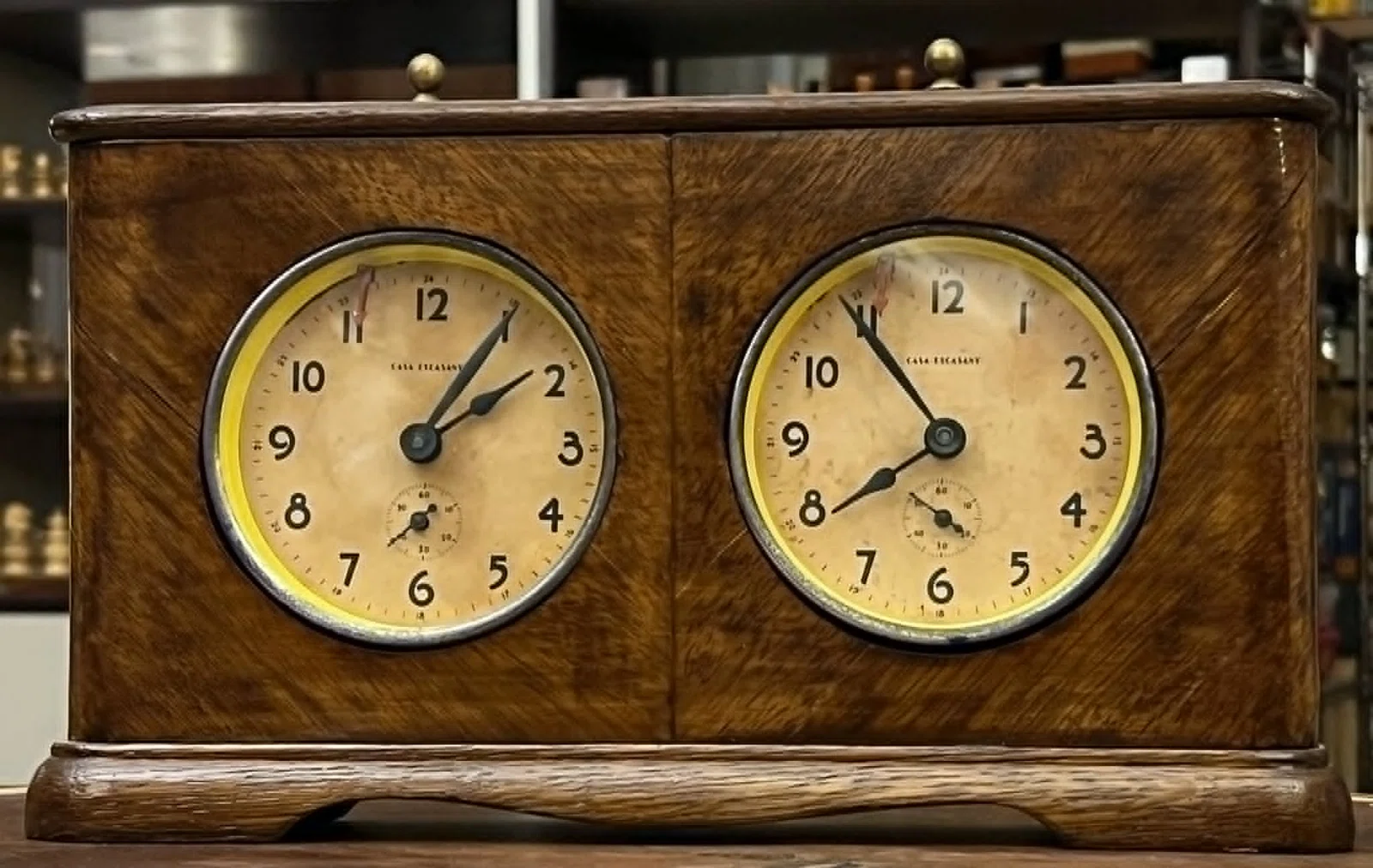
Casa Escasany
A major Buenos Aires jewelry and horology firm that may represent the earliest identifiable bridge between imported European chess clocks and localized Argentine production.
Read the History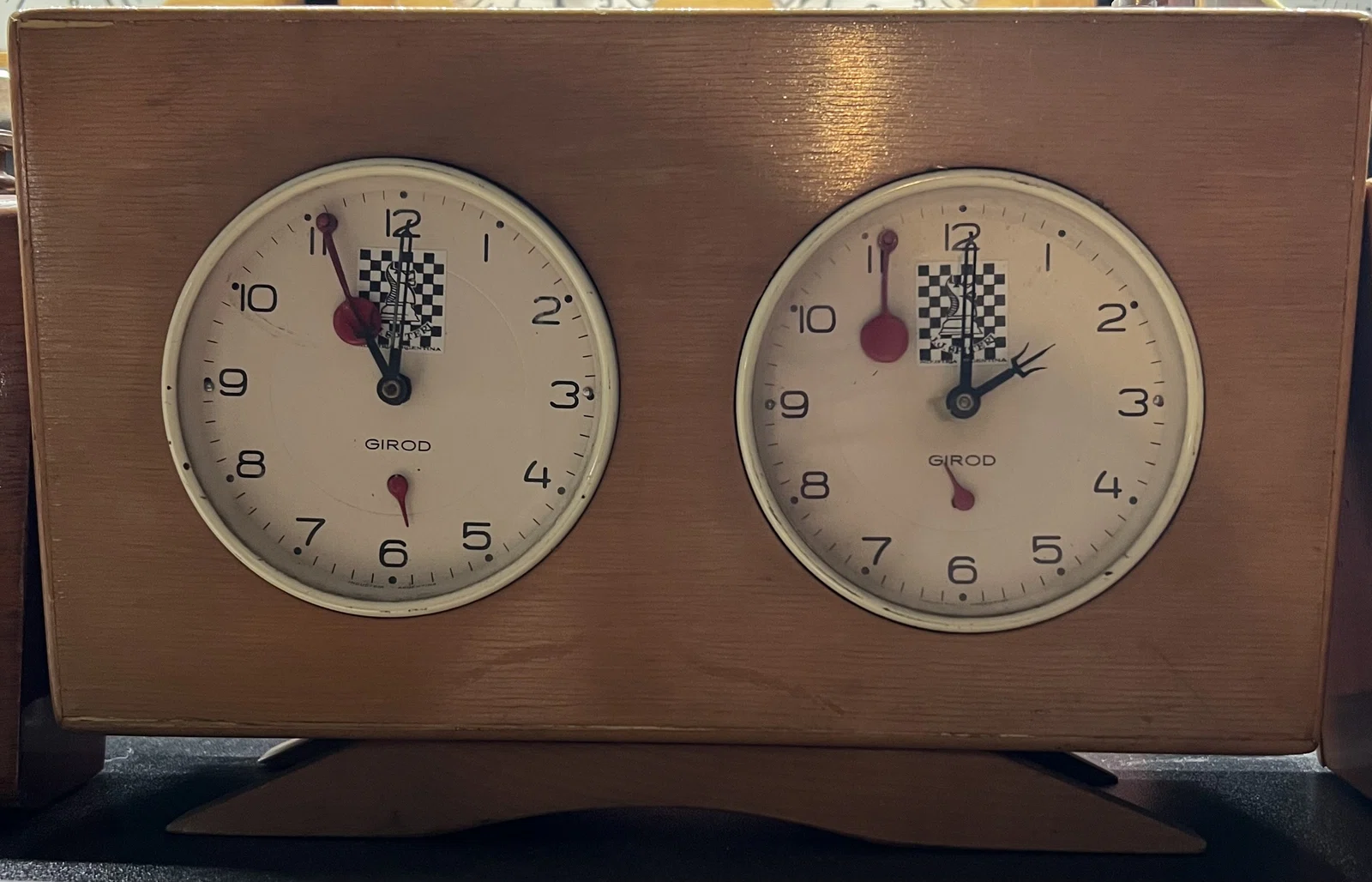
J.J. Spiteri
A Buenos Aires specialist that turned the chess clock into a recurring domestic tournament product and helped move Argentina beyond workshop adaptation toward dedicated chess-equipment manufacture.
Read the History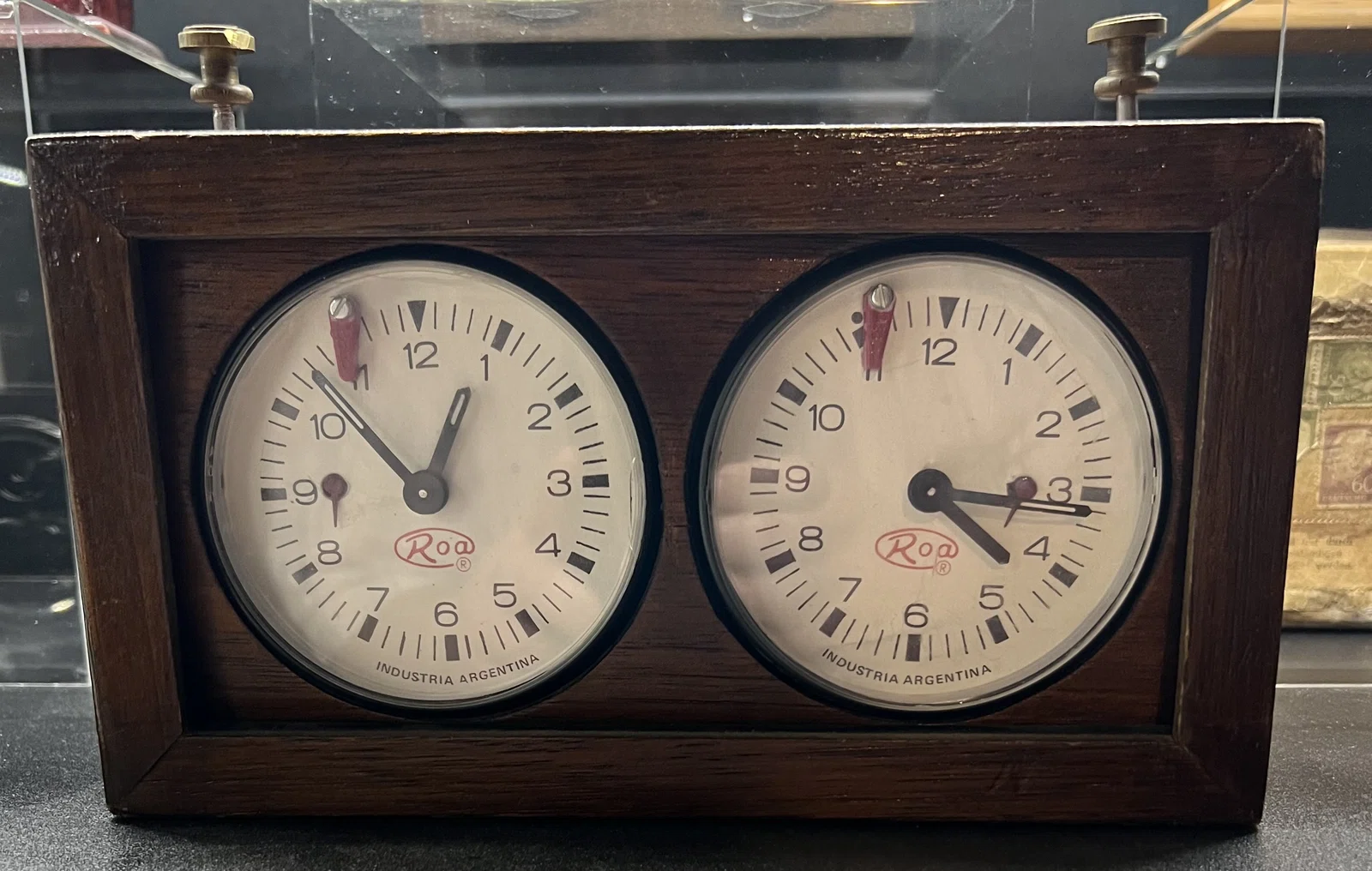
ROA
ROA consolidated Argentine chess-clock manufacture into a standardized, recurring industrial product closely tied to club and tournament infrastructure.
Read the History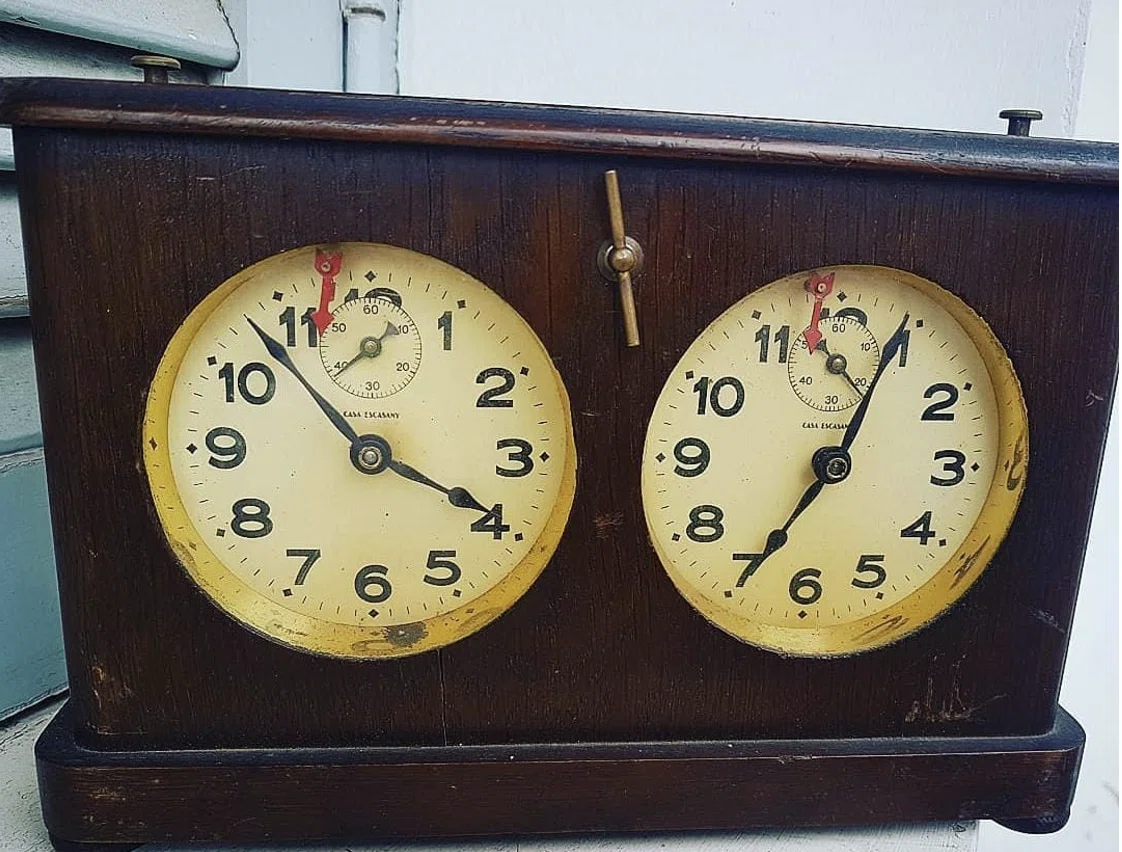
Other Argentine Clocks and Makers
Beyond the best-documented names, surviving Argentine clocks reveal a much wider landscape of local brands, workshops, hybrids, and unidentified makers.
Read the History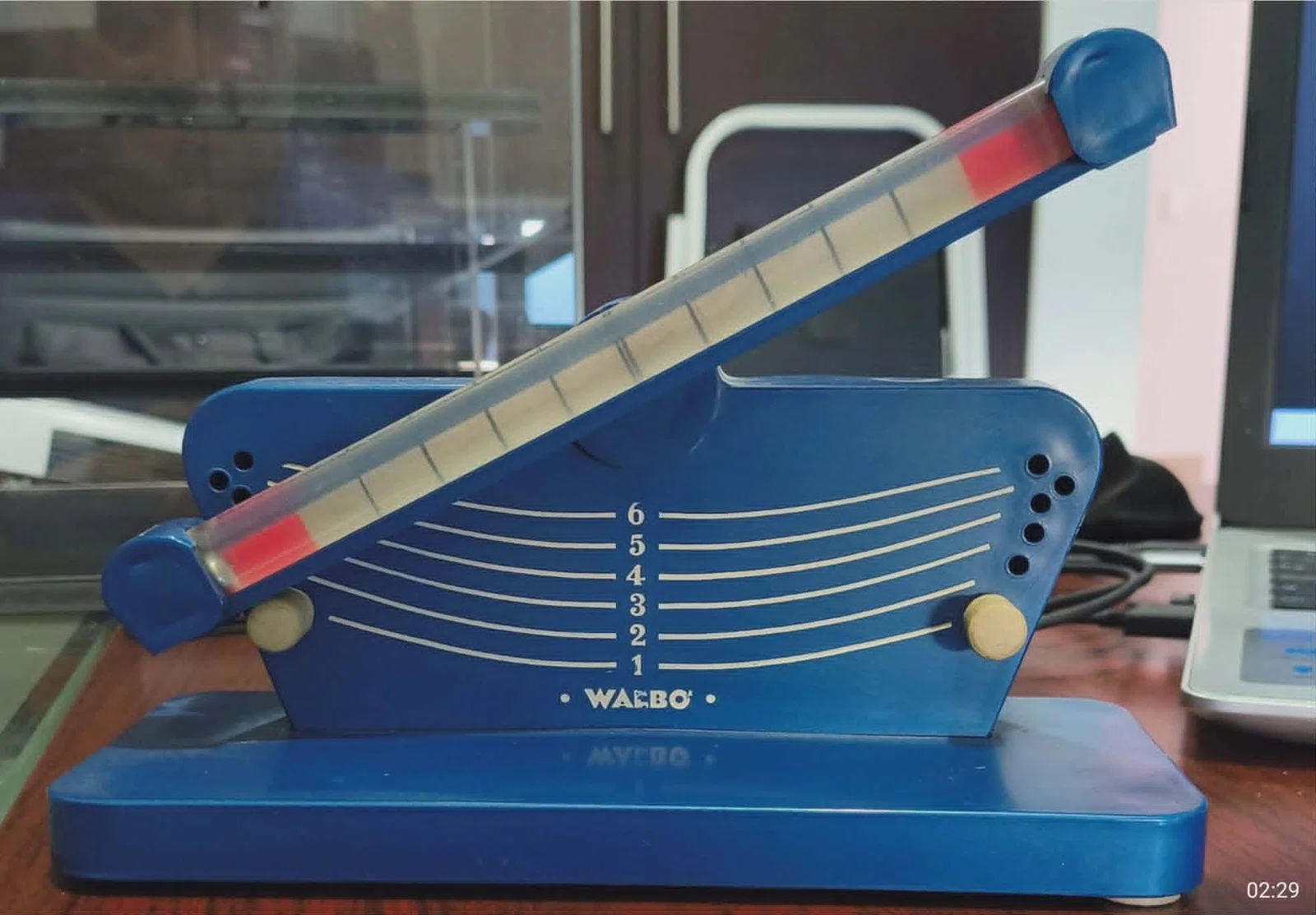
Walbo
Walter Boch's experimental rapid-chess timer challenged the assumption that a chess clock should simply count down two independent reserves of time.
Read the History